By Sheeva Azma
Talking to four other PhD students who left with a Master’s and became science writers, @SheevaAzma gained a new perspective on what she considers “failure.”
Tweet
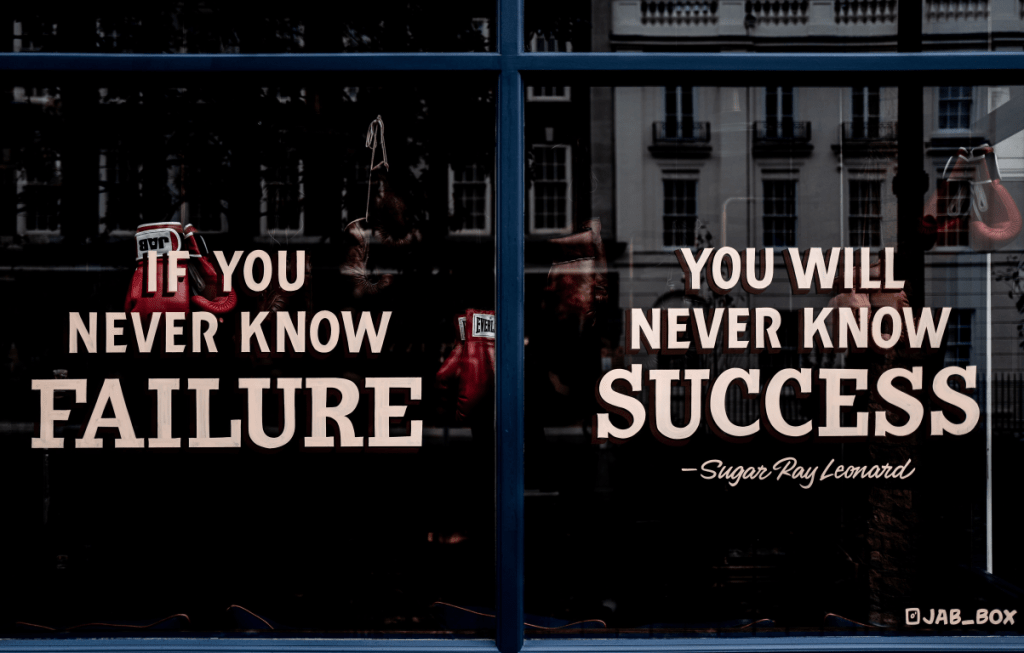
As scientists, we thrive on success, but science is just as much about bouncing back from failure as it is accomplishing ambitious goals. Leaving my PhD program felt devastating as someone who had braved MIT’s rigorous coursework to earn my undergraduate degree. It seemed like everyone I talked to told me I’d be able to do anything once I graduated from MIT, and leaving my PhD program with a Master’s, I felt I had proven them wrong. In reality, though, I was just rising to yet another of life’s challenges.
In retrospect, I am grateful that my PhD experience set me on a new path as a freelance science writer: a tough but ultimately rewarding one that I wouldn’t trade for anything.
As of writing this blog in May 2023, I am writing up both of my graduate school research projects to finally publish them and get them out in the world – by now, this is work 10+ years in the making. Though I’ve formally left academic science, I am enjoying my renewed role as someone involved in the academic study of my field, neuroscience.
For several years, it was tough to accept the fact that I’d never be a “real” scientist working in a lab, even though I love science. I knew I was lucky, though, because some programs did not have a terminal Master’s – so students would leave a PhD program after several years of work with no degree to show for it.
Still, I felt alone – like nobody else I knew had left science due to reasons outside of their control to become a science writer – for almost a decade. That changed one day when I met a science writer colleague, Bri Barbu, who faced a similar grad school fate (we’ve previously interviewed her on the blog, by the way!). Bri and I were both part of NPR SciCommers (now called Boston University SciCommers) in the pandemic. I was surprised by how much we had in common. Until meeting Bri, I had thought that I was the only one on this “soul-crushing,” as she puts it, path: the transition from PhD student (and in my case PhD candidate) to science writer with a newly minted Master’s degree.
Bri tells me, “Once I admitted to my advisor that I didn’t see a long-term future for myself in research, she was very eager to help me find my way out. I’m pretty sure she thought she was doing me a kindness, and looking back I suppose she was, in her way, genuinely trying to help. But I didn’t feel at the time like I was being given a real choice.”
After meeting Bri and commiserating about our common experiences, I began to wonder whether there were others out there who had dealt with the crushing rejection of leaving a PhD program and having to start all over again, picking up an entirely new, self-taught career path as a science writer – one not usually thought of as a natural career path for scientists.
Indeed, I began to learn that it was not that uncommon to leave a science PhD program with a Master’s degree and pick up science writing as a career.
I asked around and found three others who, like Bri and I, had “Mastered out” of their PhD programs, and become science writers:
Melissa Pappas says she faced an identity crisis after she left her PhD program, a decision that took her almost two years to make. Pappas is a marine biologist turned self-taught artist, science communicator, and writer for nonprofits and international educational institutions including the University of Pennsylvania. She is also the founder of Emerging Creatives of Science, a community of SciArt professionals
According to Pappas, leaving her PhD program was “a major shift in how you think about yourself and who you are.” She says, “The PhD is all consuming, it even consumes your identity, so leaving it really was an identity crisis for me,” she recalls “If I wasn’t going to be a scientist, what was I going to be?”
Simon Spichak, a science writer, says he remains active in science research only in his “literal nightmares.” His PhD research involved trying to grow human brain cells in a petri dish, and according to him, most things in life are much easier than that. Spichak is a neuroscientist turned entrepreneur (founder of mental health startup Resolvve), science communicator, and freelance science and technology journalist.
Spichak says about leaving his PhD program: “At first it felt like I had failed, but after a week I felt fantastic. Like a raccoon finding an unguarded treasure trove of trash. Or a bear at an all-you-can-eat salmon buffet.”
Paul Naphtali doesn’t consider moving on from his PhD to be a failure; his PhD program helped him strengthen his critical thinking skills and reignite his love of the written word. Naphtali is a microbiologist turned founder of Genowrite, where he provides content marketing services for life sciences and biotech companies.
Naphtali says, “I did what I could within my PhD, especially with the COVID-19 pandemic adversely affecting my research, and then decided that I wanted to try something else.”
None of the four ever thought they’d do science writing as their career.
Keep reading for more about each of their journeys “Mastering out” of grad school and becoming a science writer.
Navigation menu:
Bri Barbu – Chemist turned Science Journalist
Melissa Pappas – Marine Scientist turned SciArtist
Simon Spichak – Neuroscientist turned Science Writer and Startup Founder
Paul Naphtali – Microbiologist turned Content Marketer
Bri Barbu – Chemist turned Science Journalist
As a kid, @Bri_Barbu always wanted to be a writer, artist, or filmmaker, but she also loved biology and chemistry and dabbled in a “little bit of everything.”
Tweet
Bri Barbu loved to learn about biology and chemistry growing up, but she says she “was also very multi-curious,” dabbling in “a little bit of everything.” She says she always thought she’d be a writer, artist, or filmmaker when she grew up, but was told that STEM (science, technology, engineering, and mathematics) was a more stable career path. That’s why she opted to major in chemistry, with a creative writing minor, in college. “Science writing wasn’t a thing I knew about until late in my college career,” Barbu says.
After college, Barbu went on to a PhD program in chemistry. About her lab environment, Barbu says, “It was…fine, I guess? Overall, the environment wasn’t that toxic. My advisor was kind, and she really did try her best to help me. My labmates were also lovely people. Academia just wasn’t for me, and I think the trauma came mostly from trying to make myself into something I just wasn’t cut out for. I lost sight of who I was as a person.”
She had heard about the alt-ac world – careers beyond academia – in her words, people who “went on to do law or policy or work for journals and stuff.” Yet she had no real guidance on how to use her science education outside of the ivory tower. “It was really up to individual people to seek guidance on their own terms and own time. The program shuffled people off towards industry roles as the default, mostly.”
Barbu says that after passing her qualifying exams and becoming a PhD candidate, she “crashed hard into burnout and depression, and part of trying to recover from that was taking honest stock of my own goals and values. I realized that I didn’t want a career doing scientific research in industry, and certainly not in academia. I liked science communication and thinking about the broader impacts of science and I wanted to try to make a career out of that.” Despite knowing she wanted to be a science communicator, she didn’t feel like the PhD training readily supported that. She parted ways with her research project, taking a couple of classes in science communication and policy, and applied for jobs.
.@Bri_Barbu: “I always wanted to be a writer. Telling stories makes me happy. So when I was burnt out and unhappy, I was basically like ‘Screw it…I’m going to try chasing my dreams for a while and see where that gets me…'” #SciComm
Tweet
“I always wanted to be a writer. Telling stories makes me happy. So when I was burnt out and unhappy, I was basically like ‘Screw it, I don’t have a lot to lose at this point. I’m going to try chasing my dreams for a while and see where that gets me.’ In fact, I knew going into grad school that what I really wanted to be was a writer at the magazine that I currently work for. I just had the mistaken impression that I needed a graduate degree in science to be a science journalist.”
Leaving her PhD program with a Master’s, Barbu felt “Loneliness, first of all. I felt very adrift and without support for a while. And my former labmates and I quickly drifted apart, even though they had just a few months earlier been some of my best friends.”
The easiest part of leaving the PhD? “The easiest part was just…stopping work on my thesis project. I didn’t like it. I was happy to be rid of it. And the transition to thinking of myself as a science writer was much easier than thinking of myself as a scientist ever was.”
The hardest part? Getting needed experience to work as a full-time science communicator. Barbu’s advice for graduate students seeking a career in science writing: “Seek out SciComm mentors and opportunities early and often if you can. Try to get experience and connections under your belt before you graduate or otherwise leave the program.”
“I have no desire to finish my PhD,” says Barbu, who now works as a full-time production editor at the Chemical & Engineering News of the American Chemical Society. “Sometimes regret starting [my PhD]. Although I did learn some valuable lessons about how to read and extract information from research articles that comes in handy as a science writer. I probably could have learned that by a less soul-crushing path.”
“I probably could have learned [science writing] by a less soul-crushing path,” @Bri_Barbu says about leaving her PhD program with a Master’s and pursuing her dream of becoming a science writer.
Tweet
“Facing my fear of failure and rejection head-on certainly changed me as a person. I think I’m more empathetic now than I used to be. I have a much better sense of my own boundaries around work and life. And most importantly I’m now very committed to mental self-care and the idea of having things in my life that I do just for the joy of them, not because they’ll advance my career or make me money–I don’t want to hustle. I want to just be me.”
Melissa Pappas – Marine Scientist turned SciArtist
Melissa Pappas says she’s always been curious by nature since she was a kid. That’s why becoming a scientist was a no-brainer for her.
“I loved asking questions and learning everything I could about how nature worked,” she says “I was fascinated with biology in school and realized that my love for learning was the best quality I could have as a scientist.”
Growing up in the landlocked, desert state of Arizona, @MelissaPappas10 knew she wanted to be a marine biologist by eighth grade.
Tweet
Growing up in the landlocked, desert state of Arizona, Pappas knew she wanted to be a marine biologist by eighth grade. While many of her friends and family thought she was crazy, her parents supported her dreams. “They sent me to the British Virgin Islands for a summer study abroad trip while I was in high school to learn how to SCUBA dive and take a marine biology course on a sailboat. Once I experienced that world, I was hooked,” Pappas says.
She was excited when she got into Eckerd College, a small liberal arts school in St. Petersburg, Florida, and one of the best marine biology colleges in the US. “I majored in marine biology and Spanish. I took many coastal management and environmental science courses as well to be more well-rounded. I also did a few internships and wrote an optional senior research thesis to graduate. From there, I pursued graduate school because I thought I wanted to eventually teach marine biology at a university,” Pappas says.
After graduating from Eckerd College, she earned a Master’s degree at KAUST in Saudi Arabia. At KAUST, she turned her love for art into a science art (SciArt) program for the local community to help STEM students connect with each other and spark research creativity. She then attended University of South Wales in Australia for her PhD, where she continued her SciArt endeavors alongside her research, hosting SciArt programs and exhibits. In Sydney, she started a “community of artists and scientists” who collaborated to communicate marine science to the public.
Her PhD advisors did not know how to support her SciArt work; they saw it as a hobby. They told her they worried she wouldn’t finish her PhD in time if she pursued anything besides research, inadvertently shutting down her enthusiasm for SciComm. Unbeknownst to Pappas, her advisor even began deliberately sabotaging her science communication endeavors. “While I was working on my PhD, my advisor reached out to some of the science communication professionals for my school and told them to not let me work for them or collaborate on science communication projects. She did this behind my back and I only found out about those conversations because my contacts were actually my friends and told me about those correspondences. I was being cut off from the things I really enjoyed.” Pappas says her PhD research “was becoming more and more of a project that my advisors wanted to work on rather than a project fueled by my own interests.” Eventually, her advisors’ PhD plan became unrecognizable from the one she had envisioned when she had started her program.
In January 2020, 1.5 years into her 3.5 year PhD program, her primary advisor emailed her telling her to reconsider doing her PhD. She had worked so hard in her PhD program up to that point. “Before receiving that email, I had never considered leaving my PhD…I felt like a complete imposter and my anxiety rose to its highest.” She says she powered through the doubt to “end up working through the first eight months of [2020] to hit milestones for my PhD.”
Pappas made the decision to take program leave from her PhD alone, at the height of the pandemic, far from her family. “It was a really hard time to consider taking a break or quitting my PhD,” she says, but ultimately, she opted for what she wanted over “the strict path of the PhD that was not making me happy.”
She “made the leap” to science writing before she left her PhD, publishing an article about family planning in the face of climate challenges for The Conversation in Australia during Sydney’s bushfire season. Over a full year after returning home to Arizona in September 2020, she officially left her PhD program. “As soon as I left, I was hired by the University of Pennsylvania as a science writer and my skills and passions were appreciated 100 times more in the first hour on that job than during the entirety of my PhD.”
.@MelissaPappas10: “As soon as I left [my PhD], I was hired by the University of Pennsylvania as a science writer and my skills and passions were appreciated 100 times more in the first hour on that job than during the entirety of my PhD.”
Tweet
“I felt more like a failure when I was struggling with poor supervision during the last eight months of my PhD than when I actually decided to leave. I think I needed to feel like a failure just to know I wasn’t meant to be there. And, in reality, it is toxic PhD supervision that fails students. Unfortunately, as a student, it’s really hard to see anything but your own failure. At first, it was hard telling my family that I was leaving my PhD. But, I used the word leaving, not quitting, and even that language choice was so helpful. I found that people outside of academia didn’t really care if I had my PhD or not. They just wanted me to be happy. It also helped that I was really passionate about the next career phase of my life, the one I pursued in science writing and communications. It was easier to leave something when I had something else already lined up. And, my new job came with a really supportive team and supervisor, who encouraged me to continue in this field.”
.@MelissaPappas10 on “Mastering out” of her science PhD: “I found that people outside of academia didn’t really care if I had my PhD or not. They just wanted me to be happy.”
Tweet
“I was actually meant to be a writer,” Pappas says. “I have always enjoyed it. The process of writing scientific papers, though, sucked all the fun out of it…I love storytelling and when my advisors had to consistently tell me to keep the story out of the science on my draft manuscripts, I started to believe I was a bad scientific writer. It just turns out I was in the wrong field. My creativity is put to much better work as a science communicator than as a scientist. However, those two jobs can be one in the same if you enjoy both equally.”
Pappas offers the following advice for students in a PhD program: “Let grad school be an experience where you learn more about yourself.” She opines that the transferable skills she learned in grad school are ones that academics don’t talk about. “In general, graduate programs struggle showing students what kinds of jobs they could have in the future outside of academia and research fields…the thought that you either go into academia or industry is misleading…there are so many other opportunities for you!”
“Don’t always put your research as the main character in your life. Remember that the degree should serve you, not the other way around. If you know you want to be a science writer, build that into your program and speak up for what you want. If you don’t find support in your lab, you may be in the wrong lab. If I went back now to get a PhD, I would get one in science communication rather than marine science, but in reality, you don’t need a PhD to be a science writer.”
Pappas says that leaving her PhD program helped her find the best path for her – entrepreneurship – because it forced her to “really examine who I was at the time and if I was actually happy.”
As of writing this, Pappas is starting her own creative science communications business and in the process of networking with like-minded individuals and scientists out there who want to explore the many ways their own work can be communicated. Get in touch with her through her SciArt community website, Emerging Creatives of Science, to learn more.
Simon Spichak – Neuroscientist turned Mental Health Startup Founder and Writer
“My mental health is far more important than a piece of paper,” says Simon Spichak, referring to the PhD diploma. He is a Toronto-based freelance journalist that writes about topics in science and tech. He’s a regular contributor for Being Patient where he covers Alzheimer’s and dementia science and news. He’s also written for The Daily Beast, Futurism, Health and elsewhere. He also runs a company called Resolvve that helps Canadian students access low-cost therapy and reduce the time it takes to see a psychiatrist.
.@SpichakSimon left his neuroscience PhD program with a Master’s to become a science journalist and entrepreneur. “My mental health is far more important than a piece of paper,” he says.
Tweet
“Grad school can be very bad for mental health – I’m talking OCD, anxiety, depression…” says Spichak. He would know, as he received a mental health diagnosis while a PhD student.
Spichak started his undergraduate career at the University of Toronto wanting to be a doctor. He spent time volunteering in hospitals and research labs as a pre-med, but by the second year, he switched his interest to neuroscience research. He enrolled in a PhD program at University College Cork in Ireland, he says, “to study how the microbes in the gut affect the brain because I thought the field was fascinating.”
As Spichak told me, “I always say that doing anything, whether it’s starting a mental health company or getting a pitch accepted, is far easier to do than growing primary microglia (a cell-type which became the bane of my graduate school existence) in a dish.” Working in a large lab with 40+ people, he had limited supervision from his supervisors, who were often away speaking at conferences. “Most of my experiments went wrong – I was trying to grow a specific type of brain cell in a dish which turned out to be quite challenging. I developed mental health issues, switched projects, and focused on bioinformatics as a way to exit with an MSc.”
“Most of my experiments went wrong,” says @SpichakSimon on his PhD experience. “…Doing anything, whether it’s starting a mental health company or getting a pitch accepted, is far easier to do than growing primary microglia.”
Tweet
It didn’t help that the time pressure to complete a PhD was much different in Ireland from what it might have been in the US or Canada; the time was running short and requirements were piled high. “For graduation, this meant having three or four first author primary research articles. Even though I ended up with two such publications, and multiple reviews, it would have taken me two more years (at least!) to finish a PhD at my pace – I did not want to stick around in academia for so long.”
In grad school, Spichak participated in FameLab, Ireland’s national science communication competition from 2013-2021 that, as Spichak explains, “involves explaining complex research to a lay audience in a few minutes.” He won FameLab in 2020. “I got to talk about my research at pub events, through a standup routine, and even standing in a giant inflatable gut. I also dipped my toes in scientific writing for a local newspaper and Medium.”
According to Spichak, his PhD program taught him important writing lessons. “[My PhD program] taught me how to review and evaluate evidence, understand bioinformatics, machine learning, and statistics. I also learned about where the scientific process goes wrong, where things get sloppy, and some of the problems with pharma and industry.”
He also got involved in entrepreneurship during his PhD. “After completing a fourth year capstone project in my undergrad where we designed a potential therapeutic device for Parkinson’s disease, I developed a desire to build my own startup. So I thought why not try to do something about mental health – I completed an entrepreneurship course in Ireland, started networking with people I knew, and taking the first steps to starting a business. I really wanted to help students with mental health so that no one would go through what I did.”
He describes the best part of his PhD as “leaving…working on my own time as a science writer while [founding] my mental health startup, and nerding out with experts about their research.” The hardest part? “The hardest part by far is that I moved back home from Cork, Ireland to Toronto leaving behind my fantastic roommates and their cats. Oh and also income isn’t guaranteed.”
Spichak got into science journalism due to his “curiosity” surrounding Elon Musk’s brain-computer interface company, Neuralink. “I DMed the editor of a tech news outlet on Twitter, he suggested there may be a story there, and I used my persistence to write a story. I was hooked and kept pitching elsewhere, finding it rewarding to cover science and technology – and being able to actually dig past press releases to get to the crux of the story or call out the hype.”
.@SpichakSimon: “The first step to being a good science writer is being a bad science writer. Read lots of fiction and nonfiction, step out of your comfort zone, and go for it to see if it is for you.”
Tweet
Spichak’s advice for grad students seeking a career in science writing? “The first step to being a good science writer is being a bad science writer. Read lots of fiction and nonfiction, step out of your comfort zone, and go for it to see if it is for you.”
Paul Naphtali – Microbiologist turned Content Marketer
“I honestly started out wanting to become a musician,” microbiologist turned content marketer Paul Naphtali says about his early career ambitions. “I’m a concert pianist and violinist…when I’m not doing science. That said, music wasn’t something I wanted to pursue as a career because I also enjoyed memorizing trivia and learning about the biological world. Seeing that I was really good at understanding biology and that life at work could be so cool led me to pursue a BSc in Biology.”
Microbiologist turned content marketer Paul Naphtali says, “Seeing that I was really good at understanding biology and that life at work could be so cool led me to pursue [an undergraduate degree] in Biology.”
Tweet
He then fell in love with microbiology when he did his Master’s project. There, he used high-throughput sequencing to track fecal contamination in residential groundwater wells: “It was there that I encountered and fell in love with the microbial world. I wanted to know what the bacteria were doing in fecal matter and how they helped our guts stay healthy. Because of that, I took up a doctorate in a lab that specialized in human microbiome research. There, I gained even more experience reading and conducting research about the microbial world.” He followed on at McMaster University, where he did his Master’s degree, to study for his PhD the microbiology of cystic fibrosis, a progressive, genetic disease resulting from a defect in a protein called CFTR.
Naphtali says that his PhD studies inspired him to get into science writing. “Writing my thesis, preparing posters and presentations, and curating reports to send to my committee were the most enjoyable parts of my [PhD] because I had fun sharing my research with my peers and the broader community. It also helps that I love writing fiction and conveying the stories behind classical music pieces through performance!”
Paul Naphtali: “Writing my thesis, preparing posters and presentations, and curating reports to send to my committee were the most enjoyable parts of my [PhD]…I had fun sharing my research with my peers and the broader community.”
Tweet
Naphtali made the leap to science writing when he decided to advocate for the regulatory approval of a new cystic fibrosis (CF) drug in Canada. He describes the drug – called Trikafta – as “life-changing.” “I, along with other advocates at Cystic Fibrosis Canada, took the time to speak with our elected officials and encourage our provincial (Canadian version of state) government to take action and support the fast-tracking of Trikafta’s approval for CF patients across Canada. Our efforts eventually got the drug to Canada and has since been curative for many CF patients across Canada. Just seeing the impact I was having on my community by making science accessible inspired me to start a blog called Microbe Musings where I wrote about the latest microbiology news. From then on, the rest was history as I decided to start my own writing business full-time with Genowrite.”
While he no longer works in a scientific lab, Naphtali says that staying active in the scientific community by “regularly engaging with the scientific literature” is a “key aspect” of his current writing business. “On a regular basis, I read research articles that provide the scientific basis for a lot of technologies being developed by today’s biotech companies. It helps me better understand the science behind their advances, which in turn enhances my ability to transcribe and translate the stories behind their products into diverse marketing formats. Being out of the academic sphere has helped me see the ways that scientific research can help the global community and make the world a better place to live in. Telling those stories and helping the biotech ecosystem through promotion is my way of contributing to that goal.”
The easiest part of leaving his PhD program was “the fact that the whole process was gradual. While I was writing my thesis and waiting for feedback, I started finding ways to keep myself active and useful in the sciences. That’s when I started researching careers outside of academia and refining my resume for job applications. Eventually, I came across a microbiology group specializing in science communications. It was there that I met a series of mentors who helped me learn how to become a science writer,” Naphtali says, about his dual career as a science communicator and science marketing writer or copywriter. “It was these mentors giving me advice who made the whole process easier.”
The hardest part of Paul Naphtali’s transition away from his science PhD was learning about science writing on his own — and especially about copywriting for the biotech industry.
Tweet
The hardest part of his transition away from his science PhD was learning about science writing on his own. “Having to learn about science writing was not easy. There were many articles about medical and science writing, but not about copywriting for the biotech industry, which was my niche.”
Naphtali’s advice for grad students seeking a career in science writing: “Being able to communicate complex research in an accessible way is the trademark of a successful science writer. Whether you write for newspapers, textbooks, Youtube channels, or for companies, you need to know how to write accurately but in a way that your intended audience will understand. That includes excluding jargon that your audience wouldn’t understand, writing with an active voice, and allowing your sentences to flow seamlessly from one sentence to the next. To that end, I highly recommend becoming a bookworm. Whether it’s fiction, non-fiction, or any other kind of intellectual literature, reading will help you string sentences and ideas in a coherent, yet engaging manner. That’s not to say I’m going to write superfluously and ornately. What matters is that you make the point clear and encourage your readers to take the actions you want them to take,” whether it’s thinking about a new fact or checking out a product.
Naphtali adds, “Science writing is not for one who likes to procrastinate. A lot of the projects I work on have relatively strict, quick deadlines. My company, Genowrite, prides itself on completing tasks within a week or two after being assigned. On top of that, Genowrite charges by the hour, so I have to keep close track of my hours to make sure I’m efficient with the time I spend on a project.”
Naphtali says that pursuing his PhD studies helped him “develop a deep skill in critical thinking. It helped me synthesize information quickly and explain complex research in a way that anyone would understand.” #SciComm
Tweet
Naphtali says that pursuing his doctoral studies helped him “develop a deep skill in critical thinking. It helped me synthesize information quickly and explain complex research in a way that anyone would understand. After all, what’s the point in conducting research when the people you’re trying to help don’t understand how your technology helps them? That’s why I spent a lot of time talking to cystic fibrosis patients, the government, and the general public about my research. My doctorate research also had me reading so many papers outside my direct field. All that reading taught me to synthesize new information like an expert and help others. It’s become a vital skill to have for me as I work with biotech companies with many diverse needs and specialties.”
Naphtali never thought he would be a science writer until he started his PhD program. “When I was growing up, I hated reading books, let alone writing any sort of essay or document. But as I reached adulthood, I slowly got back into reading books after seeing what I was missing out on from all the novels and non-fiction books I didn’t read.” Pursuing a PhD gave him a new perspective on “the many ways I could see the world differently, the people and nature both. And I’m glad I let myself give writing a try. Now, I’m enjoying working with so many different clients and learning about different topics, from proteomics to spatial transcriptomics. It’s quite a stretch out from my expertise in microbiology, genomics, and metagenomics.”
When “Failure” Really Isn’t Failing
Interviewing Barbu, Pappas, Spichak, and Naphtali, I gained a new perspective on what I consider “failure.” The four of them, and I, all experienced the transition from being on track to getting a PhD to leaving and doing something else completely. None of us imagined we’d be science writers as our job, but here we are, redefining what it means to communicate science.
None of us imagined we’d be science writers as our job, but here we are, redefining what it means to communicate science. #SciComm
Tweet
A few of us entered our PhD programs knowing we wanted to pursue science communication as scientists, but failed to gain the appropriate resources to direct us on that path (one that can be followed alongside science research, for the record). All of us gained relevant skills for our current career in our PhD program, but not through the intended means. Many of us felt alienated from science at the end of our experiences navigating a PhD education. All of us sought resources from outside academia to support our new ventures.
To me, our careers represent what science education should be like. If you ask me, a science undergraduate or graduate degree should train you to be able to communicate science just as much as it teaches you how to perform scientific research. I am optimistic that through our current work, alongside our fellow scientific communicators, we can help elevate the role of science communication in science education.
 Fancy Comma, LLC
4 thoughts on “4 PhD students (besides me) who “Mastered out” and became science writers”