By Sheeva Azma
FloorCharts: Where Capitol Hill meets data visualization, and often, science communication.
Fancy Comma has affiliate partnerships to support its blog content. We may earn commissions for products purchased via affiliate links.
I talked to William Gray, founder of FloorCharts.com and the iconic Twitter account @FloorCharts, which keeps meticulous track of the posters and signs that appear on the House and Senate floors of the United States Congress.
Keep reading to learn about how he founded FloorCharts, the ways it has helped advance his career in communications, and advice he has for his fellow Congress nerds and science communicators alike (and yes, you can totally be both – Fancy Comma’s Sheeva Azma checks both of those boxes).
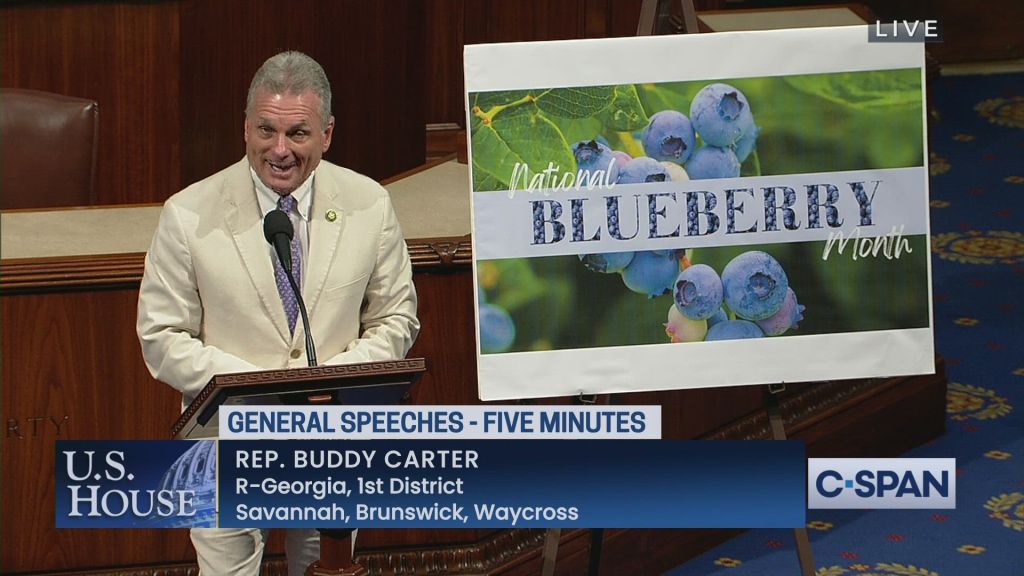
Sheeva: What is your job? Do you work in Congress?
William Gray: I’m the communications director for a think tank in Washington, D.C. My career evolved from being a journalist, to working in journalism communications and advocacy, and now complex public policy and branding issues. Day-to-day I manage teams across media relations, digital communications, events and more.
Sheeva: How long have you been running FloorCharts?
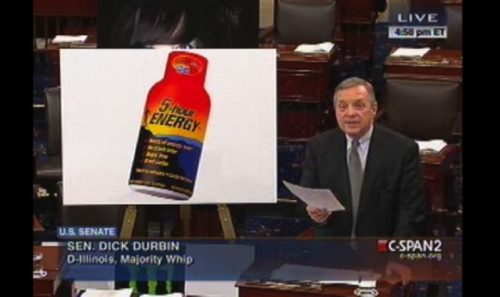
William: I’ve been running FloorCharts since November 15, 2012. It was originally “SenateCharts” because it all started with Senator Dick Durbin (D-IL) using a giant image of a 5-hour Energy Drink and reporters Niels Lesniewski and Elise Foley were tweeting wondering why there was not an archive of all these crazy props, posters and charts. Tumblr made it very easy to start a blog – and gather a following – so a few clicks later and the rest is history.
Sheeva: Your Insider article says you got interviews to places you never thought imaginable due to your blog. What kind of opportunities have you had since starting the blog? Should I start nerding out about Congress on Twitter to get a job there (I guess more than I do now)? Side note: working as a comms director in Congress would be one of my many dream jobs!
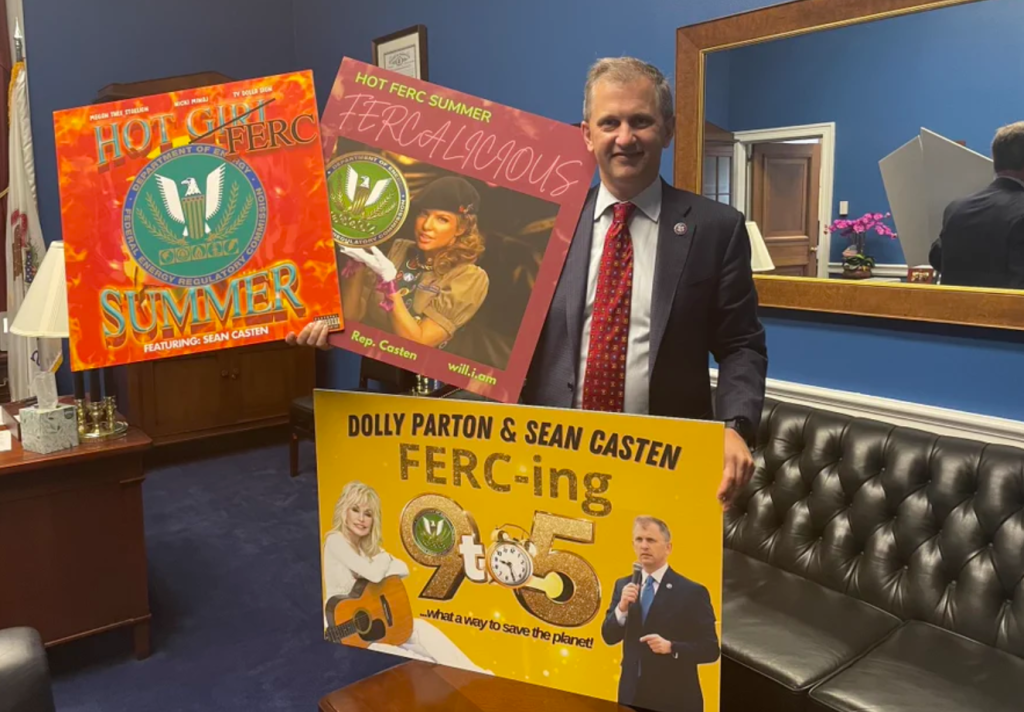
William: It’s true. For example, I interviewed for The Washington Post social media team, and I’m convinced I received an invite because I littered the cover letter with charts, GIFs and funny jokes about the fact I never stopped watching Congress. (I didn’t get the job, but I wouldn’t have been right for it at the time, anyway. It was just a pleasure to interview and meet some of the team.) I’ve met an untold number of communications professionals through the archive and Twitter account, including @SenatorShoshana, who now reports to me on my day job. My first communications boss, Gabriela Schneider, responded to a creative cover letter I wrote, invited me to get beers, and helped me find a job that fit my skill set in the communications world (and then hired me for a different job a few years later). I’ve likewise met so many staffers who just want the work of their member of Congress to be seen and for their policies to be given a life beyond the bill or legislative discussion, so they turn to #HotFERCSummer or memes to do so.
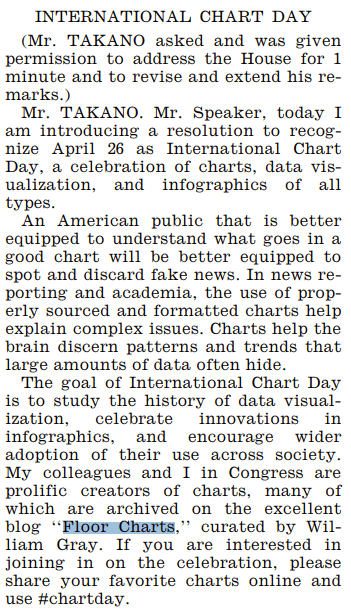
William: So, should you start nerding out about Congress on Twitter more? Absolutely. Full stop. It’s some of the best-and-worst parts of Twitter (I am not an expert, but I make friends with many of them)! Beyond just career opportunities, thanks to Yuri Beckelman and Congressman Mark Takano (D-CA), Floor Charts was entered into the Congressional Record in 2018 and we built a pop up art gallery for International Chart Day. I even Kickstarted two picture books about FloorCharts (and I am never doing that again)! I’ve spoken to students around the country, met professors, given interviews like this— all things I never would have imagined. Beyond that, because I found a niche in this crazy, complex political landscape to call my own, D.C. has become more fun, more human, and I’ve felt more connected.
Sheeva: Any favorite charts you have seen on the Senate or House floor?
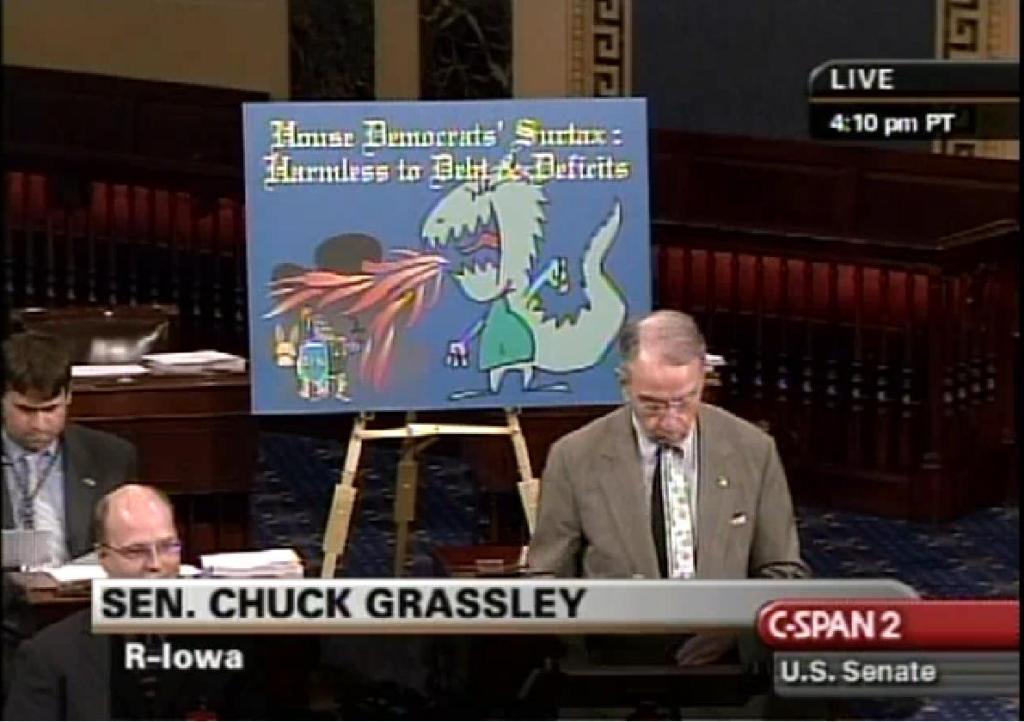
Favorites change week to week, honestly. Unforgettable charts, however? Everything to do with #HotFERCSummer and Rep. Sean Casten (D-IL) and his then-digital lead, Emilia Winter. Senator Joni Ernst’s (R-IA) team never quits and also never fails to let me know when I should turn on C-SPAN2. (That’s good comms. work. Everything is fine, right, y’all?) But the all-time unforgettable charts? Senator Grassley and the Debt and Deficit Dragon and … the Tax-A-Saurus Rex by Senator Alfonse D’Amato (R-NY).
Sheeva: What are your least favorite charts?
I have two least favorite types of charts and this will surprise nobody who watches C-SPAN or has ever made a powerpoint. Some members of Congress simply print slides onto a poster and do not realize they’re virtually unreadable to viewers. You cannot read the data, the sources—anything. It is immensely frustrating, particularly if you enjoy working in public policy and want to know those things. (If you really want to start picking apart charts and visual data, follow Alberto Cairo and buy his book: How Charts Lie: Getting Smarter about Visual Information. The second has more to do with the Senate cameras and positions on the floor: Some members suffer from lighting glare because of where they are positioned. Is this solvable? Absolutely. Have they? No.
Sheeva: What is your process like? How much time does this take from your daily life? Is it something you really enjoy?
William: On a good week, I’ll average three to four hours of pulling and archiving charts. A normal week, I’m usually watching C-SPAN and snagging what I can in real time, particularly if it is anything incredibly attention-grabbing – memes, photos, etc. For example, virtually everyone online saw, read or was shared on the Hunter Biden and Rudy Guiliani charts and posters out of the House Oversight and Accountability Committee hearing this week. That’s one example of how the news came to me. I do enjoy archiving and collecting these props, but I’m also never caught up because it is too much for one person to do while I’m also juggling a full time job. That’s why it is a passion project—unless someone, somewhere wants to pay me to do it! Library of Congress? Bueller?
Sheeva: Do you ever consult on visual design for charts in Congress now that you are an expert on them?
William: Ha, no. I’ve been brought into some offices and shown charts they’re planning to use, for example, or had staff ask me what others have done. It’s actually fascinating because, more and more, the internet is influencing the language of the props and charts, and those staff also trend younger and are using platforms far beyond Twitter. I’ve experimented with TikTok, Instagram and other platforms, but none of them had that special sauce of politician-journalist-digital stew that causes the attention to spike and dip into areas of the online conversation you wouldn’t normally reach. (RIP OG Tumblr, which took to FloorCharts immediately.)
Sheeva: In the Business Insider article, it mentions that “the point we were trying to make was the value of information, how it can be conveyed, and that we should be celebrating people who do that great work.” What insights do you have on the value of information, and how it can be conveyed through your work with FloorCharts? Have you learned any nuggets you’d want to share with science communicators or others communicating complex info?
William: One of the communications and policy experts I came to know because of FloorCharts and Twitter is Jonathan Schwabish. He runs a project called PolicyViz, works at the Urban Institute and has a book, Elevate the Debate, that is all about communicating your research to your target audiences.
My insight on the value of information as it relates to FloorCharts is: Think about your audience when you’re communicating your work. Communications professionals are often accused of dumbing things down, but the opposite is true—we’re trying to synthesize and draw attention to deeply complex research so readers and viewers are curious and enticed to learn more. To bring it back to FloorCharts: Congress would not use charts and posters if they did not draw our attention. David McCulllough wrote about Congress using props and posters in 1902.
Sheeva: What do you see as the future of FloorCharts? Are you ever going to pass the baton to someone else?
William: Honestly, I’d love to grow the project. I’ve been very lucky that it has been going on for more than a decade and there is still interest in it from the internet, news, and Congress. I’ve long wished the Library of Congress would start an official FloorCharts archive (taxpayers are paying for these, after all) so that the Congressional record could have the images attached. But until then, it’s me, the hundreds of reporters, staff and policy nerds who text, tweet, DM and e-mail me. There’s something beautiful about a project like this belonging to me, myself, and I, with an audience who wants to help because they care.
Visit FloorCharts on the web at www.floorcharts.com and on Twitter @FloorCharts.
 Fancy Comma, LLC