By Sheeva Azma
There are many ways to improve the use of science in courts. Scientists can support judges and lawyers; expert science witnesses can answer questions from the jury; and scientists can help write amicus briefs, among others. What if we took a few of these solutions and put them into practice?
Thanks to my membership in the National Association of Science Writers, I was lucky enough to attend a two-day conference on science and the courts for free. The conference happened in Washington, DC at the American Association for the Advancement of Science (AAAS) on September 21 and 22, 2023. I was only able to attend the first day, but it was exciting and packed with information all the same. In this blog, I recap the second-to-last session of the first day, focused on bringing scientifically sound evidence to courts. If you are interested in my other blogs recapping the rest of the first day’s sessions, you can read them here.
The session was called “Utilizing Scientific and Technical Expertise” and it was moderated by Alain Norman of the AAAS Center for Scientific Responsibility and Justice. The session focused on different ways scientific evidence can be improved by bringing in different scientific experts. I was surprised to learn that science communicators have a role to play, too – for example, in helping write amicus briefs – so keep reading for that and more!
4 Ways to Bring Trustworthy Science to Courts
The first speaker was Dr. Joe S. Cecil, who is retired from working at the Federal Judicial Center, and is a member of the National Academies of Sciences, Engineering, and Medicine, where he has also worked. Dr. Cecil has been instrumental in bringing sound science to the judicial system, and is, as Mr. Norman mentioned, working on publishing the fourth edition of the Reference Manual on Scientific Evidence in conjunction with the Federal Judicial Center (FJC) and the National Academies.
Dr. Cecil took the podium first. “I don’t know about you, but I haven’t heard a lot of uplifting stories about science,” he said about the previous panelists. Indeed; I already wrote about the use of false scientific evidence to convict people and structural issues with the use of Daubert.
“My job is to be here and keep hope alive,” Dr. Cecil stated, before discussing a number of instances of bringing science to the courts that, while they were not “sparkling successes,” as he said, neither were they “abysmal failures.” He mentioned the cases to help “reshape, retool” and see if there is “incremental progress” that can be made. Almost all of his experience is in civil litigation, mostly regarding admissibility of evidence, where Daubert is relied upon heavily.
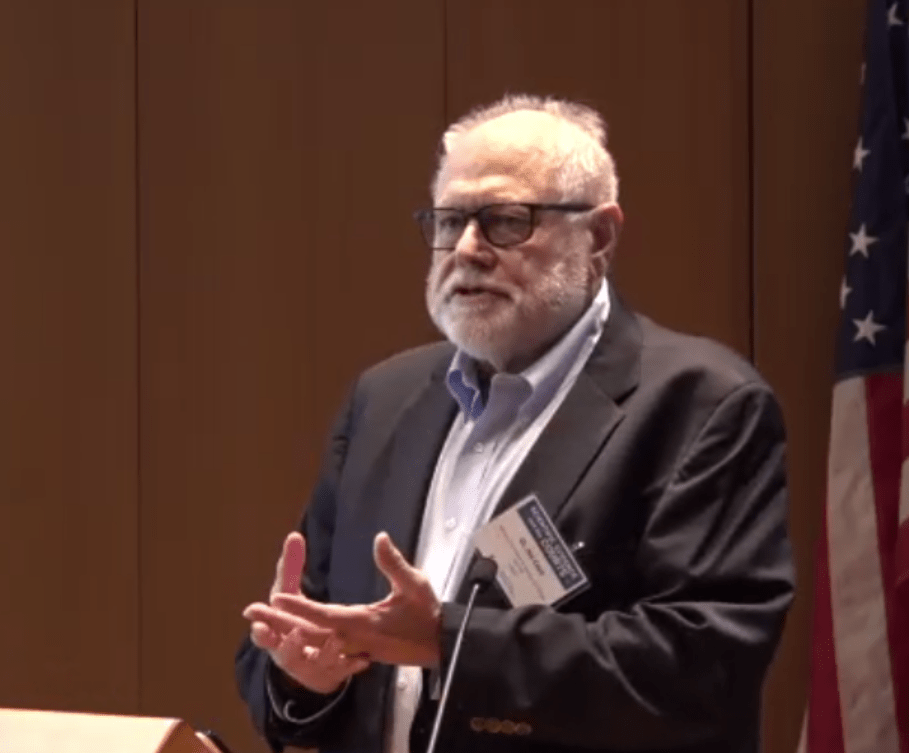
Because a lot of scientific evidence is admitted due to precedent – in other words, it’s always been admitted without challenge, and continues to be admitted – a huge area for science in the courts is challenging evidence based on “junk science.” That’s why the different ways of challenging scientific evidence was the focus of Dr. Cecil’s talk.
The courts need “extraordinary assistance” in challenging scientific evidence, as the normal mechanisms are inadequate for the decisions that judges make. He outlined four different ways that could be used: court-appointed experts, special masters, technical advisors, and a reference manual.
Court-appointed experts are expert witnesses agreed upon by the parties. They may be chosen by either side. This is found in Rule 706 of the Rules of Evidence. “Unbroken failures” and “very modest successes” have been achieved with court-appointed experts, according to Dr. Cecil. Procedural problems, such as judges not knowing they need a court-appointed expert, are one issue. Another is that the legal system is adversarial; judges themselves are devoted to the adversarial system because they worked as litigators in their past lives. They know that it’s easy to “shop around” for an expert that can drive the outcome of the trial. Judges’ fear, therefore, is that they will have an expert that drives the outcome of the case: “an improper delegation of authority,” as Dr. Cecil states.
Special masters, like court-appointed experts, have also been around for a while. Rule 53 of the Federal Rules of Evidence discusses the authority of special masters authority in the court. A special master, like an accountant, can be appointed by the court to figure out how to calculate damages to pay out in the trial, for example. Dan Rubinfeld was once tapped as an economist to be a special masters. His expertise helped frame the litigation. While the attorneys did not like it, the judge found it to be a success.
Technical advisers are the equivalent of a scientist working as a law clerk, but they are “very, very rare,” says Dr. Cecil. “The judge can appoint someone,” such as a scientist, “on the authority of the court…[to] work closely with the judge…and help them deal with the kind of complex information that’s coming in.” Attorneys are not thrilled about technical advisers, since the technical advisers can cause the case to turn in a way the attorney does not want, and perhaps unreasonably. Dr. Cecil gave the example of a 9th circuit case involving the appointment of a technical advisor in an instance involving psychometrics. In the court, the adviser structured the litigation so that it made sense to psychometricians who were actually reviewing the case.
A reference manual on the scientific evidence is like a classroom textbook in science. Dr. Cecil has been instrumental in writing the Federal Judicial Center’s reference manual (you can check out the third edition here, but know that Dr. Cecil is, as of writing this blog, still working on the fourth edition).
These four mechanisms can be reshaped, reworked, and retooled to help judges find the information they need to make a thoughtful decision about whether the evidence presented for admission should be brought in court, says Dr. Cecil.
Juries Are “Paying Attention” to Scientific Evidence
Next in the panel discussion was Dr. Shari Seidman Diamond, a law professor at Northwestern University. She spoke about improving the quality of science in the legal domain. The United States Supreme Court has cited her research articles on ways to improve the relationship between science and law.
She started off her talk by mentioning that expert testimony is standard fare in legal cases, and not just in federal courts. She recounted her 2017 study of expert testimonies and their impact on juries. For the study, she looked at 50 civil jury cases in Arizona’s state courts, ranging from motor vehicle accidents to medical malpractice. She found that 84% of cases had experts, with the median number of experts being three experts for a case. What’s more, she found that 77% of experts were met with another expert brought from the other side’s legal team.
As part of her study, Dr. Diamond videotaped the civil jury deliberations to see whether the juries were paying attention regarding scientific evidence, and she found that they were. In deliberations, the jury talked about 89% of the experts, mostly about the substance of their testimony. In Arizona, jurors can ask questions of the live witnesses, and they did so of nearly half of the 122 live experts. Jurors could not ask questions of experts with pre-taped testimony, which Dr. Diamond says “was a problem” for the judicial process.
The next question Dr. Diamond had was: Are scientists being asked for help with court cases, and are they agreeing to help? She found that, of scientists who were asked to help, most participated and provided assistance at least once. The most common reasons for scientists to turn down a request to serve as an expert in a court case were, ranked from most to least common:
- The scientist did not have time;
- The request was outside the scientists’ area of expertise;
- The evidence didn’t favor the party asking;
- The scientist chose not to work with particular parties or attorneys; and
- The scientist had doubts about the legal system.
It can be difficult to find a correct expert for a case, Dr. Diamond said, because the expertise needed is often very niche, and there are not good ways of connecting scientists with the courts. Dr. Diamond found that 77.9% of lawyers found experts via a referral from another lawyer; 66.4% got a recommendation from another expert. About half asked the client to find experts, and 42% engaged in scholarship such as a Google search or consulting the literature. About 30% used an expert referral organization.
There is currently not a good group that can identify an expert for an attorney. Dr. Diamond suggested that the AAAS have a group of experts willing to serve as expert witnesses in all kinds of fields, who could be consulted for various legal cases. She surveyed members of AAAS and the National Academies, and about half of AAAS fellows and about a third of AAAS fellows were “likely or extremely likely” to serve as an expert witness.
What changes can be made to this process, Dr. Diamond asks? She’s studied this question in detail. She finds that lawyers do not want to lose control of some aspects of the legal process, so they do not support allowing the experts appointed by each side to question each other, for instance. However, lawyers support the idea of juries submitting questions to expert witnesses, as is done in the state of Arizona’s civil courts. Dr. Diamond’s research also showed that experts that had more experience in the legal system liked it more and had a more favorable attitude toward the courts.
Future challenges Dr. Diamond identifies for improving the expert witness system include: matching competent experts with relevant expertise to court cases; providing experience with the legal system (or at least with lawyers) for expert witnesses; and possibly changing legal procedures to make the best use of experts.
Making Scientific Information Accessible in Court Cases
Last to speak was Deanne Ottaviano, General Counsel at the American Psychological Association (APA), about the APA’s amicus curiae program, which has helped decide 23 Supreme Court cases and even more lower-level court cases.
The APA has a great program in which it provides amicus curiae briefs to appellate courts to provide them with high-quality, unbiased, and non-partisan psychological science straight from APA’s experts. Before we continue, first, a couple definitions:
An appellate court is a court that hears an appeal to any trial court. The trial courts are the lowest level of the courts, followed by the appellate courts, and the Supreme Court. If a trial court decision is challenged, it goes to the appellate courts. If the appellate court decision is challenged, the case can move to the Supreme Court.
Amicus curiae is Latin for “friend of the court” – in other words, a person not involved as a party in a case, but an outsider providing information.
Okay, back to APA’s amicus briefs! They don’t intervene on behalf of plaintiffs and defendants; rather, they intervene on behalf of clarifying psychological science and promoting understanding. The APA’s first amicus brief was written in 1962. In 1977, the APA’s amicus brief was cited in the first Supreme Court decision, Detroit Edison Co. vs. the National Labor Relations Board. Since then, APA’s amicus briefs have been used to inform courts on expert eyewitness identification, false confessions, brain injury assessment, and more. The briefs can be cited in decisions or in dissents, but as Ottaviano noted, the dissents can sometimes turn into the majority in the case of a challenge.
In 2023, APA submitted an amicus brief in the case of People of the State of Michigan v. Stewart. The appellate argument focused on whether a defendant’s confession could be submitted as evidence testimony. The APA, with the Michigan Psychological Association and the National Association of Social Workers, summarized the science for the court, explaining that “the psychologically coercive nature of the police-interrogation techniques used in this case would significantly increase the risk of obtaining a false confession,” as the APA explains on their website. The court used this research to decide that confessions could not be used as witness testimony.
The APA tracks a number of issues in diverse fields and relies upon its experts to help develop amicus briefs. People can request briefs through the APA Amicus Program, or the APA can develop one independently based on their own survey of the judicial landscape. They then reach out to three or more psychologists who support filing a brief. Then, after an internal approval process, the APA’s experts work with an outside law firm to develop the brief.
The amicus briefs help boost science competency by building it into the system.
Solutions for Elevating Trustworthy Science
At the end of the panel, the moderator asked the panelists: what solutions do you see? Jurors could submit technical questions; scientists could submit amicus briefs more often. Moderator Alain Norman of AAAS asked, “if you had a magic wand, how could you tackle these issues?”
Dr. Cecil’s suggestions were to 1) restore faith in science among judges and jurors and to 2) loosen the chokehold that the adversarial system has on the legal system. He gave the example of England’s legal system, in which the parties work together to choose one expert for both sides. This allows them to take out some of the bias involved by departing from traditional means of adversarial presentations and party control of the evidence.
Dr. Diamond suggested 1) greater science competency by lawyers, judges, and juries, and 2) having it built into the system so that absolute statements such as “if you let this person free, he will 100% kill someone again” cannot be made based on false evidence.
Ottaviano mentioned 1) ending ending anti-science discourse, and 2) seeing more scientific societies engage with appellate courts to submit amicus briefs (by the way, as a science writing company, we’d love to work on legal briefings – if you are writing an amicus brief, get in touch!). Other organizations could do that in other arenas. She mentioned that the AAAS itself is working on signing onto amicus briefings with the APA.
A member of the audience asked about ways to educate judges and juries on science. Dr. Cecil said that this already happens in patent law and tech-heavy cases; judges and jurors can be educated on the scientific stuff before hearing the sides of the case. Tutorials can be used to educate judges and ensure that they are knowledgeable on science issues.
Dr. Mnookin, who had presented earlier at the conference, stepped up to the microphone and asked about whether it would be possible to create a culture or spaces to “experiment” a little in terms of educational models for trials for jurors and judges. Some things, like Dr. Diamond’s research into what to change in expert testimony mechanisms, suggests that juries should be able to ask questions of expert witnesses. We could put those into practice and see whether they work. Some probably won’t work, but some might.
Lastly, I asked a question remotely: how can science communicators get more involved in writing amicus briefs? Ottaviano, general counsel at the APA, said to reach out to professional associations, and specifically to their office of general counsel.
Learn More about Science in the Courts
If you want to read my blog recaps of the other sessions I attended at this conference, check them out here. You can also watch this whole session, as well as the rest of the symposium, on YouTube.
 Fancy Comma, LLC
One thought on “Bringing Trustworthy Science to Courts”