By Sheeva Azma
How can the United States maintain a competitive advantage in the complex semiconductor landscape?
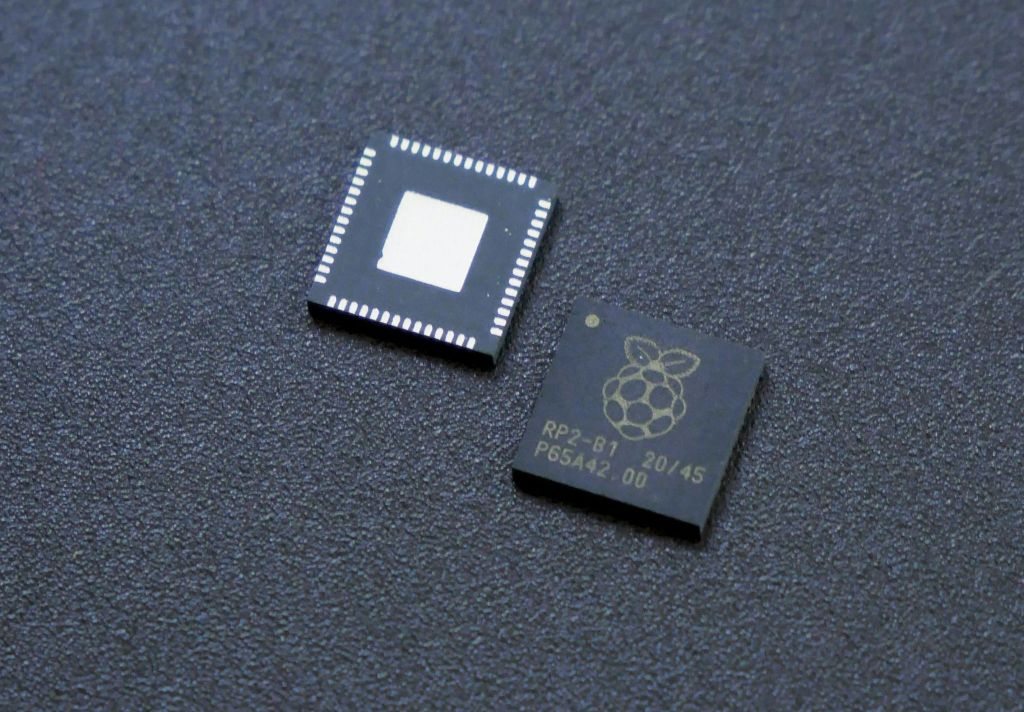
That was the driving question of a talk called “When Semiconductor Walls Come Down: Managing IP and Security Globally” at the 2024 AAAS Conference. Because I attended the conference for free as a journalist affiliated with that National Association of Science Writers, I excitedly attended as many virtual science policy sessions as possible…and am excited to share all I learned with you. Check out the full list of 2024 AAAS annual meeting recap blogs here, or all of my writing about various AAAS seminars and meetings I’ve attended here.
This particular session on semiconductors was organized by Chips for America and moderated by a former AAAS Science and Technology Policy felow named Christie Canaria who now works at the National Institute of Standards and Technology in the CHIPS Research and Development Program. The session delved into management of intellectual property, also called IP, as well as research security.
The session had an interesting premise as it was focused on two kinds of information crucial to a high-tech business: trade secrets and intellectual property (IP). A common form of IP is a patent, which is a document you get that tells you that you have the rights to a certain technology or process. Trade secrets are information valuable to a business that, while unknown to the public or even other companies, has some monetary value attached to it. That could be any information you do not want your competitors to know. If a large room represents all of the secrets of a company, the patentable information might be the size of a beach ball.
Obviously, if you have a patent, nobody else can use your same technology; however, by surrendering some information, you have released some trade secrets into the world by even applying for a patent.
This made me wonder: is being secretive about domestic semiconductor infrastructure a good strategy? When is it good to be secretive vs. not-so-secretive in one’s high-tech business dealings as a chip fab (that’s another way to say “semiconductor manufacturer” – why are there so many ways to refer to these high-tech companies?).

I have blogged previously about the ways that sharing information across borders actually advances science faster for everyone. When there is so much money involved, though, as with tech companies, I assume things get a bit dicey. You might be able to share a general framework but are probably less likely to share exact details especially if means another semiconductor company will benefit, potentially contributing to your demise as a competing chip fab.
The speakers for this talk were James Pooley, PLC, of Menlo Park, California; Albert Keyack of Barley Snyder LLP in Malvern, Pennsylvania; and Meredith Schoenfeld of the US Patent and Trademark Office.
One piece of the US semiconductor R&D puzzle is just understanding how trade secrets and IP fit into the semiconductor space, as legislation that happens without understanding these can create problems, according to Pooley.
Most of the action happens in the margins, says Keyack. While semiconductors have been around for over 30 years, there’s “stuff along the margins that needs to be discussed, brought up, [and] talked through.”
Pooley arrived in Silicon Valley in 1972, but it wasn’t called Silicon Valley back then. He says that back then, the nascent high-tech area was bursting with trade secret lawsuits. He spoke mostly about trade secrets in his part of the session; Keyack, on the other hand, mostly talked about IP. Schoenfeld talked mostly about her work in the CHIPS and Science Act’s program office and the National Science and Technology Center, a public-private consortium that acts as an innovation hub for US domestic semiconductor infrastructure.
Intellectual property (IP) vs. trade secrets: What’s the difference?
The IP world is governed by registered rights: patents, trademarks, copyrights, and designs are in this world. You can get a document that tells you you have rights. You get a document, though there may be disagreement about what the document’s words mean, Pooley explained. Trade secrets, on the other hand, have a very broad scope. They can be anything, such as: AI tools, source code, strategies, curated market data, records of one’s experiments, finding out what doesn’t work, competitive intelligence…the list goes on.
Pooley explained that businesses often opt for trade secrecy because it is valued much more than IP. Sadly, trade secrecy becomes more difficult in a landscape in which one collaborates with their competitors, storing and transmitting data in shared digital networks. We have to figure out how we can deal with each other productively to make these things work, Pooley says. He likened the collaboration to a a romantic relationship – in the beginning, both parties might be “smitten” with the collab. However, as time passes, and reality sets in, what ensues may not be so “smitten.” The most frequent source of business-to-business disputes, Pooley stated, is inadequate nondisclosure agreement or collaboration agreement, which includes making sure the agreement is instituted properly and everything progresses as it should.
People sign NDAs because they just want to move on and get to the actual work, Pooley explained, but there’s more to it than that. These legal agreements discuss the timeframe of the collaboration (does it go on forever or expire?), who is tasked with filing for patents, who controls the information’s secrecy, and so on. If the NDAs don’t fit together, that can create lots of problems. Straightforward management failures are often to blame, says Pooley. While he argues that trade secrets enable R&D, he says that effective management is required to do so.
For semiconductors, Pooley says, trade secrets are things like a fab’s optimal settings for high performance. While processes can be patented, and equipment can be reverse-engineered, settings remain an area where trade secrecy makes sense for technological competitiveness. Even if you do patent something, he further adds, you can retain information related to the patent as a trade secret.
“The grand bargain” of disclosing some trade secrets to get a patent
Trade secrets are, as their name implies, kept secret. Patents are not. Once you present an invention at a conference or publish it in a paper, you have a year to patent it, which involves disclosing the invention; otherwise, if you don’t patent it in that one-year time period, someone else can patent the same invention.
Keyack stated that early patents were a “deed” to intellectual property and covered things like gunpowder. Unlike trade secrets, though a patent is based on disclosure. “The grand bargain” in obtaining a patent is that you “have to disclose all the details. You can’t hold anything back. In return, you receive a right to exclusivity – though not a monopoly.” In other words, you gain exclusive rights for a certain period in exchange for disclosing everything you invented.
It gets complicated when there are many parties involved in innovation. Says Keyack: if company A has a trade secret and company B makes the same discovery, and company B files a patent, company A can invalidate the patent due to prior use. It gets complicated since you disclose what was the trade secret. The grand bargain is that “you disclose it, and then it’s free for everyone to use.”
Patents are issued throughout the world, but a group of five patent offices in the US, Europe, China, Japan, and Korea, receive and process 85% of all global patents. These five are known as the “IP 5.”
While patents are written into the Constitution, trade secrets are not. Though patents are not explicitly discussed in the US Constitution, Article 1, Section 8, Clause 8 gives Congress the power “to promote the progress of science and useful arts, by securing for limited times to authors and inventors the exclusive right to their respective writings and discoveries.” Trade secrets, on the other hand, are not enshrined in the Constitution but derived from relationships, contracts, and promises, according to Keyack.
The European Patent Office or EPO has some features which put it ahead of the IP flock, so to speak, so that they can ensure that patents are given out properly. Advances in machine translation coupled with the help of humans mean that Europeans can translate documents needed for the patenting process back and forth between many different languages (yes, even the scientific jargon, says Keyack).
In the high-tech world, there are lots of standards. The European Patent Office got all the standards, including the draft standards, and spent $100 million to create a database of them all. “EPO does some elaborate, spectacular things because you don’t want to get a patent that’s invalid. It’s like buying a car that doesn’t have a clean deed,” says Keyack.
In the US, the USPTO has a pilot program going on for semiconductors; the EPO doesn’t have a system that parallels this, but they have noticed an uptick in semiconductor patent applications, according to Keyack. Intel is filing patents in the US and will file with EPO later, but for now, the US is the main nation for semiconductor patents.
There is opportunity for cross-border collaborations, for example, with US and Brazil, who is the fifth biggest market for cell phones (the US is the third), according to Keyack. He says “the idea of cross-border [collaboration] is baked into the system, but you have to follow the rules.”
Rebuilding a domestic US semiconductor infrastructure
The CHIPS and Science Act established a domestic framework for semiconductors in the United States after over two decades of globalization pushing them abroad to be produced at lower cost. Technology has advanced a lot since those times, and chip technology has largely progressed overseas; now, it’s been brought back thanks to CHIPS and Science. The pandemic necessitated a move away from globalization, as did the shifting geopolitical environment which put nations such as China in the lead for semiconductor R&D. Nearby, in Taiwan, political strife, natural disasters, and more, jeopardize the ability of the US to obtain semiconductors from the Taiwan Semiconductor Manufacturing Company or TSMC.
Enter the CHIPS and Science Act to fund a domestic infrastructure, building chip fabs such as Intel and TSMC in Arizona, Samsung in Texas, and other companies in New York. There’s a lot of work to be done to coordinate this work, though. Firstly, there’s semiconductor research that occurs largely at universities and research labs, and then there’s the issue of producing the semiconductors themselves, and ensuring that the US has enough chips to meet all of its demands in an increasingly high-tech world. All of those little details are being coordinated by the National Semiconductor Technology Center, a public-private consortium that is an innovation hub to “conduct R&D semiconductor prototyping” and support the high-tech workforce. The US Patent and Trade Office helps give recommendations about IP when people want to become members of the NSTC. Universities, startups, and other aspects of the semiconductor landscape have had lots of benefits of collaborating even in a precompetitive stage. Things such as semiconductor materials and packaging can be handled by USPTO to “help facilitate R&D and production” and move everyone forward together in the best ways, according to Meredith Schoenfeld in the Office of General Counsel at the USPTO. Questions that come up, according to her, include:
- How do we share this IP?
- How do we deal with IP?
- How do we ensure not too much is disclosed or not too much is destroyed in terms of trade secrets?
LMEC is a Belgian institute funded by the Belgian government which is a consortium of many different companies that work on a project-by-project basis. It is self-funded at this point, and that is what the USPTO is working towards with their CHIPS office, according to Schoenfeld.
Challenges of a US semiconductor industry
Pooley says that the US semiconductor landscape impacts trade policy and national security as well as how the world works together on semiconductor innovation. “Political and trade policy” are in conflict, says Pooley: “a lot of innovation won’t happen because we won’t allow ourselves to hang out with some of our foreign colleagues working in the same area because of concerns with international competitiveness and national security.” It will be interesting to see what kinds of collaborations are allowed and what is not, says Pooley.
Knowledge can also spread inadvertently through leakage. For example, an employee at a US chip fab can move to another country and start working in chip R&D in another company there, bringing their expertise with them. It is difficult to know where the knowledge has leaked, according to Pooley, so a “containment” approach can be a good option to reduce risk. In a containment approach, one seeks to eliminate any situation that represents danger to the extent possible. While he admits that it would be useful if risk could be measured and quantified, he states that “containment” is just based on prior experience.
It’s an “arms race” in every industry, not just semiconductors, says Keyack. There are a number of issues that make the IP landscape a complicated one. Says Schoenfeld of the USPTO: “These are things that we should all be considering and thinking about. These implications are real.”
Explore All Our FREE Science Policy Resources
Read all of the AAAS 2024 Annual Meeting recap blogs here! Upskill and become a science policy expert with Fancy Comma’s FREE resources.
 Fancy Comma, LLC
2 thoughts on “The Role of Secrecy in US Semiconductor Policy”