By Ella Lesher
The era of science in the ivory tower is over. Welcome to science in the legal arena.
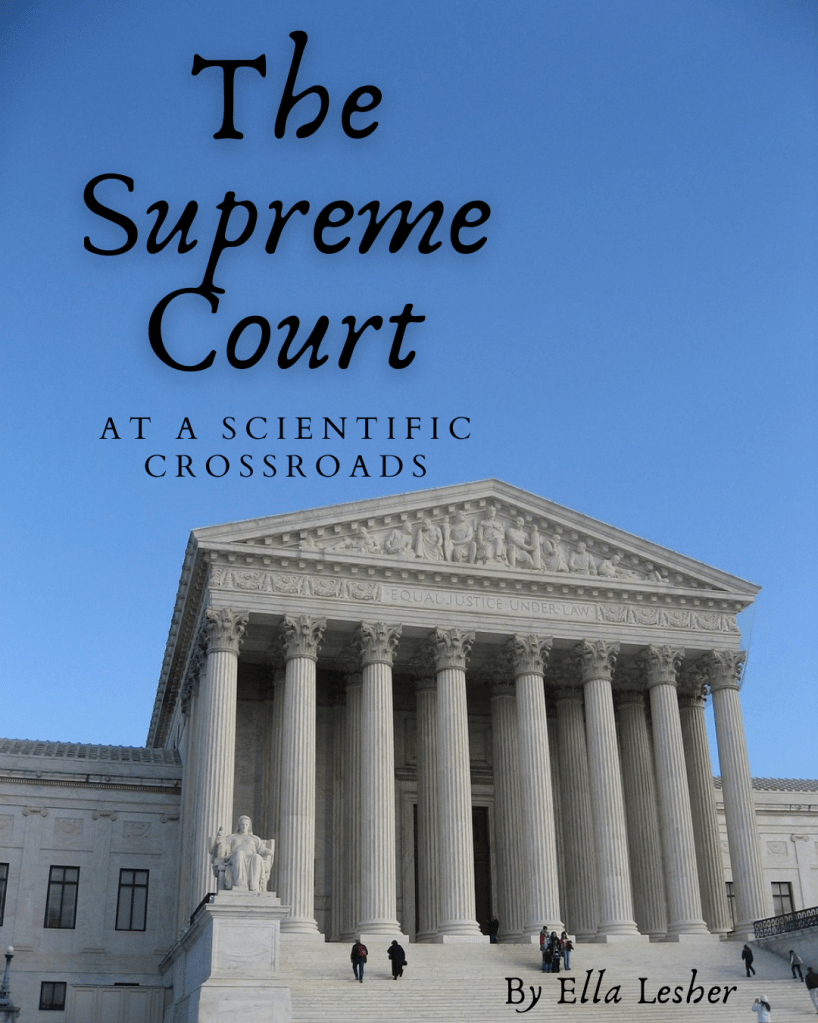
What happens when the highest court in the land redraws the lines between scientific evidence and federal policy? The U.S. Supreme Court is forcing scientists engaged in public health, environmental protection, and cutting-edge technology to confront a critical question: Will your research still matter in the halls of power?
The Post-Chevron Era: When Judges Become Scientific Arbiters
The Supreme Court’s decision in June 2024 to overturn Chevron deference represents a seismic shift in how science intersects with law. For nearly 40 years, this doctrine told courts, “Hey, if a federal agency is interpreting a law that’s a bit fuzzy, and their interpretation is reasonable, then you should generally go with it.” This framework empowered agencies like the Environmental Protection Agency (EPA), Food and Drug Administration (FDA), and National Oceanic and Atmospheric Administration (NOAA)—institutions staffed with scientists, engineers, and public health specialists—to translate complex scientific findings into practical regulations.
In Loper Bright Enterprises v. Raimondo and Relentless, Inc. v. Department of Commerce, the Court eliminated this deference. As a result, agencies are facing a surge in legal challenges to their scientific interpretations and regulatory decisions. The Loper Bright decision may also lead to a more cautious, or even timid, approach to making new rules based on the latest scientific findings. Why? Every new guideline and fresh standard could be immediately challenged in court. Judges, who usually are not trained in these specific fields, might be tasked with weighing complex scientific arguments.
Think about it: who’s more likely to be better equipped to decide if a certain chemical is safe for public consumption: a panel of toxicologists at the FDA, or a generalist judge? The answer seems obvious, yet the legal system’s framework for establishing truth fundamentally diverges from the scientific method.
Scientists operate on a foundation of provisional truth, built on hypotheses, rigorous testing, and continuous revision, speaking in probabilities and recognizing that today’s discovery might be tomorrow’s superseded theory. Lawyers, however, are geared towards adjudicated truth, aiming to establish a definitive narrative of facts through adversarial persuasion, prioritizing conclusiveness and finality over the inherent tentativeness of scientific understanding.
This clash is most acutely felt when scientific understanding isn’t fully settled, leading to the exasperated legal plea, “Why can’t you guys agree on the science?” It’s a question that reflects a system demanding a singular, definitive factual finding while often stripping away the crucial caveats and ongoing debates intrinsic to scientific discourse. This epistemological disconnect, where one system seeks provisional understanding and the other demands definitive answers, leads to significant friction when science enters the courtroom.
In the post-Chevron world, the courts have a much more direct say in agencies’ interpretations of the law. The Loper Bright decision overruling Chevron created a ripple effect for the stability and predictability of science-based regulations, from environmental protections to drug approvals. It means that the scientific justifications for agency rules—whether on chemical safety, air quality, or emerging biotechnologies—will be subject to judicial review rather than simply being assessed for reasonableness. Consequently, we, as scientists, need to be even more rigorous, transparent, and watertight in our data and methodology, because our work, and the policy built upon it, is now positioned directly in the legal firing line of judges who may lack specialized scientific understanding.
Environmental Protection in the Crosshairs
The Supreme Court’s environmental decisions illustrate how this new judicial assertiveness affects science-based policy. In Seven County Infrastructure Coalition v. Eagle County, Colorado, the Court unanimously ruled that the National Environmental Policy Act (NEPA) requires environmental impact statements to consider only those effects that agencies have regulatory authority to address.
While this case centered on a proposed Utah rail line that would transport millions of gallons of oil daily, its implications extend far beyond a single project. The decision constrains how agencies conduct environmental assessments, requiring them to focus solely on direct impacts they can regulate rather than the broader ecological effects that might cascade from a project. As a result, it is easier to win approval for highways, bridges, pipelines, wind farms, and other large infrastructure projects.
Limiting environmental impact statements puts scientists in a particularly difficult position. Ecological science is built on understanding interconnected systems—how changes in one area ripple through entire ecosystems—yet the Court’s ruling suggests that this holistic scientific perspective might be legally irrelevant if agencies lack regulatory jurisdiction over all the interconnected effects.
The decision reflects a shift of power to make and enforce environmental regulations over to the judicial branch, continuing a trend that has been building. As science journalist Natalia Mesa notes, U.S. Supreme Court decisions have undercut federal agencies’ ability to curb pollution and fight climate change in recent years. For instance, in Ohio v. Environmental Protection Agency, the Court stayed the EPA’s 2023 “good neighbor” provision, which required upwind states to mitigate emissions affecting downwind air quality. These decisions collectively signal a judicial willingness to second-guess agency interpretations of environmental science, even when those interpretations align with established scientific understanding.
The Chilling Effect on Research Funding and Innovation
The impacts of increased litigation risk and judicial oversight extend beyond individual regulatory decisions to the very foundation of scientific research. Agencies may become more cautious in their funding decisions, particularly for research areas that could inform controversial regulations.
Think about it from a federal agency program officer’s perspective: if your agency’s interpretation of how to implement congressionally mandated research programs is now subject to independent judicial review rather than deference, you might hesitate to fund cutting-edge research that could later be challenged in court. This caution will likely impact research in politically sensitive areas such as climate change and emerging biotechnologies.
The uncertainty also affects long-term research planning. With more than 60 cases on the Supreme Court’s 2024-2025 docket and many more advancing through the system, researchers face an increasingly unpredictable environment for both funding priorities and regulatory applications of their work.
Adapting to the Post-Chevron Reality
Despite these legal challenges, the Supreme Court’s decisions should not diminish the importance of scientific evidence in policy decisions—they simply change the arena in which that evidence must be presented and defended. While research must continue to play a role in our courts, we must consider shifting our focus to Congress and the public. As Justice Thomas once wrote, the role of the Supreme Court is not “to judge the wisdom, fairness, or logic of legislative choices” but to ensure that they do not violate the U.S. Constitution.
We can’t assume that good science automatically translates into good policy through agency expertise. Instead, we as scientists must arm ourselves with rigorous research and clear communication to engage directly with legal and political processes:
- Judicial Education: Support programs that improve judges’ scientific literacy without compromising judicial independence.
- Policy Advocacy: Advocate for policies that protect the integrity of science in policymaking.
- Public Communication: Present research findings in accessible ways, explaining technical terminology and creating analogies that clearly convey results to broader audiences. When courts become arbiters of scientific interpretation, public understanding of science becomes even more critical to ensuring sound legislation and decision-making.
- Expert Witness Testimony: Courts lacking scientific expertise may increasingly rely on expert witnesses to interpret complex scientific evidence. Be prepared to translate technical concepts into language that judges and juries can understand.
- Amicus Briefs: Scientific organizations and individual researchers can file amicus briefs to help courts understand the scientific implications of their decisions. These briefs provide crucial context that might otherwise be missing from legal proceedings. Keep an eye on future Supreme Court dockets, and consider where your expertise may be relevant.
For five more ways scientists can shape science policy, head over to this Fancy Comma blog article!
This new reality requires scientists to expand their skill sets beyond research and publication. The future of evidence-based policy depends on the scientific community’s ability to navigate this transformed landscape, where technical expertise must be paired with legal literacy and public engagement.
The era of science in the ivory tower is over. Welcome to science in the legal arena.

Ella Lesher is a summer 2025 Georgetown University VIEW Intern with Fancy Comma. She graduated from Georgetown in 2025 with a B.S. in both Neurobiology and Government. An incoming Georgetown Law student, she is interested in science communication for lawyers and politicians to drive decision-making, especially as related to neuroscience.
 Fancy Comma, LLC