By Sheeva Azma
Working in policy consulting, one is acutely aware of the ramp-up to election day. Here in the United States, the midterm elections are scheduled for November 3, 2026. The midterm elections are called such because they are halfway through the presidential term. People up for election therefore include members of Congress, as well as state and local candidates, who are running for office.
November 3, 2026 is less than a year away — only 360 days from writing this post! It’s hard to believe we have been doing this power-to-the-people thing for so long as a nation — our 250th anniversary is coming up next year.
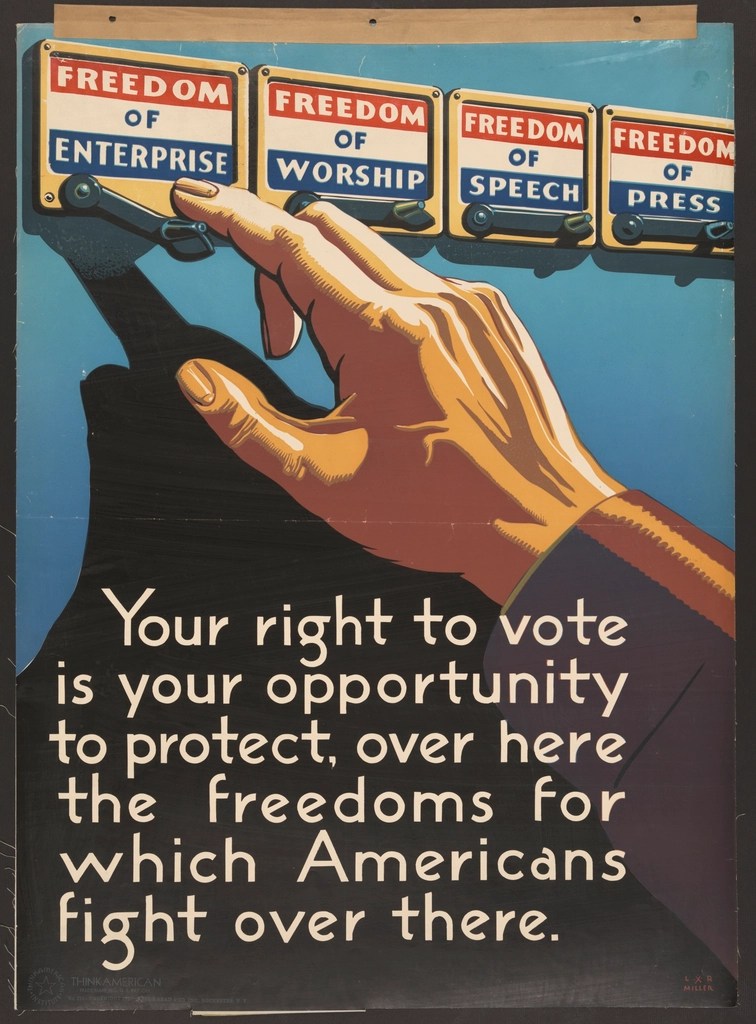
Before the 2026 midterms, though, there are also the primary elections, which decide which candidates will be on the ballot from the two main parties, as well as, potentially, third parties. So, while the actual midterms are just a little less than a year away, the race has already started. According to the National Conference of State Legislatures, Arkansas has the first 2026 primaries on March 3. That’s coming up pretty quickly, I must say! I assume the election cycle starts earlier in Arkansas than other places.
As someone working in politics for decades, the political season creeps up on me each year. After one election cycle, there is a period of celebration (or not), and then it ramps up all over again. There’s no real break from it, because that’s how politics works. The cycle just keeps running and repeating itself, with the political pendulum swinging from one side of the political arena to the other. It’s a system that works, but that doesn’t make it any more enjoyable than any other tireless grind.
When the political news inevitably ramps up closer to election day, I’m stuck behind my laptop trying to find the best words and communication strategy to support my candidate, or at the gas station getting a pre-canvassing coffee before going door-to-door, while myself trying to avoid the political chatter and hype.
In the run-up to the 2022 midterms and the 2024 presidential elections, watching political news felt like a psy-op (I think that’s military-speak for what basically amounts to psychological warfare). I would spent a solid four hours canvassing and talking to receptive voters, then flip on the news to see them announce that my candidate would lose. In 2022, my candidates did not lose, despite that hype; in 2024, most of them did. It all just goes to show that you can never really know what the electorate is thinking until we count the votes on election day.
The more you work in politics, the more you notice how media, public opinion, and candidates themselves have and don’t have influence on the elections. Political optics are so complex — could they be more complex than the actual physics concept of optics (think rainbows and prisms)? Sometimes, it sure feels like it.
This election cycle is unique in many ways due to the layoffs of scientists and science communicators in the federal workforce. I’ve talked to some of these people in our Defunded Science Series. A few scientists that have left the workforce due to the government layoffs are now running for office.
Science is on the ballot in the 2026 midterms. If you’re a scientist interested in getting involved in a political organizing, check out our helpful explainer of the different roles here. You can also visit Stand Up for Science, a political group dedicated to restoring science’s rightful place in public policy, and get involved.
If you are running for office or know someone who is that might benefit from political communications, strategy, or other types of consulting, get in touch — we can help.
 Fancy Comma, LLC