By Sheeva Azma
Being a science creative sometimes does not feel very creative at all. It can seem like we do nothing and can feel like we do not exist in the world.
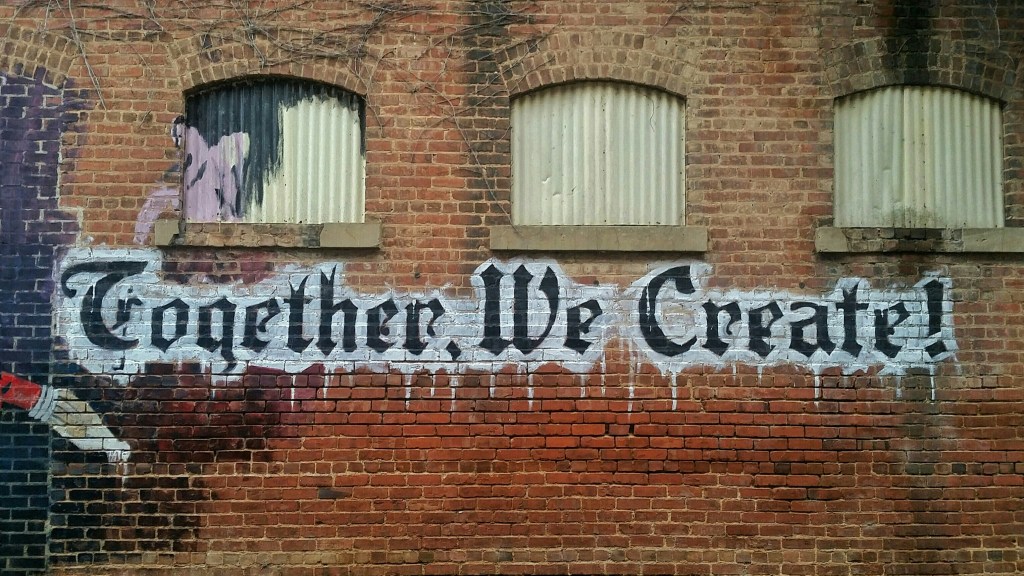
Being a science creative sometimes does not feel very creative at all. I wish there was a guide to productivity for science creatives, because sometimes, it feels like we do not exist in the world of “traditional” (non-scientist) creatives.
That’s why, for years, I struggled with the idea that I am not a true “creative.” In my mind, a creative has a humanities background and feels creative every day. They are the artsy people who like to shop at thrift stores and who know who all the movie directors are.
I am not one of those people. I have a neuroscience background and had to wear closed-toed shoes to work for over a decade. Dressing up meant looking boring enough to fit in in a room of usually mostly older, mostly male scientists. If I dared to wear something unusual and cute, I had to prepare to get weird comments about it from everyone who simply did not get it. Talk about a creativity-killer.
The workload involved in starting a freelance science communications and policy consulting company from scratch was also significant, and a lot of it was not that fun, to be honest (though it had to get done). There was a period in my life where I was so stressed out as a freelance science creative and my brain was so bogged down by it all that the only movies I ever watched were the original Star Wars movies.
I finally got some of my cognitive resources back when I got a bit more established in this field, but I kept waiting to feel truly “creative” — full of ideas and without a care in the world besides creating great, beautiful things.
I waited and waited for years to feel like a real “creative,” until the other day, I realized…hey, I have been a creative this whole time!
Sure, I might not be able to name all of the movies that won an Oscar in 1995, but I can tell you which Nobel Prize winning scientists I have met, or how I felt trying to put words to an idea in my latest article. In the pandemic, after a long day of thinking and writing about science, I would sometimes I fall asleep furiously editing Google Docs in my mind. Haha!
I might not be able to name all of my favorite movie directors (I can barely remember who directed all the different Star Wars movies), but I can tell you an interesting story about that time I had to pursue my creative scientific endeavors amidst people who were actively hating everything I stood for as a scientist.
Creativity is hard work. Sometimes, I feel like I am doing nothing even when I am getting stuff done. The challenges I face as a creative make no sense to me, though pursuing creative answers to them can be just as complicated as the stuff I imagine people facing in their 9-to-5 jobs (except I don’t have a boss to boss me around — well, my boss is myself, so I guess I boss myself around). The end result of a creative product is often the product of tireless work done with the sole purpose of helping people live better lives, which feels more like a service than being fun and artistic.
I’ve also learned that what feels like what feels like a day of hard work to you — thinking, piecing random concepts together, just watching random stuff on YouTube — might look like doing nothing to people who are not creatives. That does not mean they are right. Even the time you spent not working can help you be more creative, as I learned when I developed burnout communicating pandemic science.
Why don’t we appreciate when we don’t have to work 12 hours a day, instead of feeling guilty? That’s what the “real” creatives do, apparently (my impostor syndrome is very obvious in this article, I suppose!).
The other day, I was watching an interview conducted by my fellow science creative, Andrew Huberman, where he interviewed his former neighbor, a book author named Stephen Pressfield. Pressfield stated he only writes for 2.5 hours a day, but that they were high-quality writing hours. It was an interesting discussion on creativity. While Huberman has been maligned in science circles for being too bro-y, I appreciated the fact that he comes to his podcast and interviewees with an open mind and takes the time to simplify and explain science concepts. (I’ve only watched two episodes of his podcast, though, and I am not a subscriber…yet?)
Being a science creative is thankless, tireless work. For that matter, so is being a regular creative. None of it is as glamorous as it looks. At the same time, what feels like “work” to you might not look like work to someone else…and that’s okay. In other words, I might never seem like I have a “real” job, and that’s okay with me…because I have learned that I am more than my career title.
Ultimately, a big lesson I have learned over the past 12+ years as a freelance science creative is not to measure my success as a creative by my day-to-day productivity. There are often no tangible products of creativity until you sit down to write, even if ideas are swirling around your brain as you are cleaning, grocery shopping, and so on. It’s tough to feel as productive as a creative as I did in the lab, collecting and analyzing data, and having something to show for it (usually).
Another thing that is counterintuitive after spending over a decade in science hustle culture, at least to me, is: if you’re a creative but not feeling particularly creative, there are ways to boost your creativity, but they are not aligned with hustle culture. Sleep can help, for example. Think about bringing up how much you slept, rather than how tired you are, as small talk for your next networking event. I can just imagine the weird (and probably envious!) reactions.
As creatives, we have a unique purpose in life and that is to take everything around us and turn it into art. That is quite often easier said than done, and it is a process that comes with experience.
So, the next time you’re feeling uncreative, remember: that’s part of being a creative. You’ll get your highly-anticipated glimmer of creativity again soon if you don’t give up — but you’ve been a creative this whole time, and you’ll never not be a creative.
 Fancy Comma, LLC
2 thoughts on “Things I Have Learned about Being a Science Creative”