By Monet Wright
It remains crucial to rely on bipartisan narratives that place emphasis on collective good when it comes to public health.
The Trump administration has redefined “gold standard science”
In early January, the United States Department of Health and Human Services (HHS) approved revisions to the Center for Disease Control and Prevention’s childhood vaccine schedule recommendations, forwarding administration efforts to advance “gold standard science.”
In a press release touting the alignment of US childhood immunizations with so-called “peer, developed countries,” with a special focus on the nation of Denmark, HHS Secretary Robert F. Kennedy, Jr. stated that this new alignment “protects children, respects families, and rebuilds trust in public health.” However, these revisions have been challenged by experts. The American Academy of Pediatrics called the move “ill-considered,” suggesting it would “sow further chaos and confusion and erode trust in immunizations.” They further wrote, in the same Instagram post, that “During this uncertain time, the AAP will continue to publish our own childhood vaccine recommendations.”
Danish Health Authority advisor and infectious disease Jens Lundgren, a doctor at Copenhagen University Hospital who serves on the board making recommendations about vaccines the European nation of 6 million should mandate, questioned the move. In Denmark, childhood vaccines are paid for by the government, and as Dr. Lundgren explained to ScienceInsider, the nation holds off on some vaccines to avoid “vaccine fatigue.” In short, Dr. Lundgren says: Denmark’s public health situation does not exactly resemble that of the US.
Director of the Vaccine Education Center at the Children’s Hospital of Philadelphia Paul Offit argues against matching other nations such as Denmark given their higher rates of child hospitalizations from the diseases excluded from immunization recommendations, asserting that “They should be trying to emulate us, not the other way around.”
It’s certainly true that American trust in public health needs rebuilding. Experts believe that recent changes to the system–including withdrawal from the World Health Organization and wide-ranging alterations to the US Centers for Disease Control and Prevention (CDC), along with vaccine schedule revisions, have made America sicker. However, these changes come in the wake of the COVID-19 pandemic, which saw public opinion diverge from expert opinion and create new public health perceptions focused on individualism and liberty which rejected and questioned mainstream science in unprecedented ways.
To what extent has public trust in the US public health system degraded, and to what degree have recent administrative actions been successful in improving said trust? The answer to these questions may decide US public health efficacy as a whole.
Eroding public trust in healthcare has given rise to the Make America Healthy Again or MAHA movement
Trust in public health decreased in the COVID pandemic and remains low: a survey found that only 40% of US adults reported “a lot” of trust in physicians/hospitals in January 2024, down from 72% in April 2020. The recent series of divisive and even questionable sweeping public health reforms engendered by the administration are at least in part a response to the aftermath of COVID and the desire for administration officials to combat what they viewed as ineffective federal response during the pandemic.
According to a poll from the Kaiser Family Foundation and the Washington Post, 38% of parents “across gender, race, and ethnicity” support the Trump administration’s Make America Healthy Again or MAHA movement. Of those, 56% of MAHA parents answered that they trust the Trump HHS to “provide reliable information about vaccines,” which is double that of non-MAHA parents, of whom only 23% trust the administration’s health information.
The MAHA federal healthcare infrastructure features several prominent scientists who criticized the federal response to the COVID-19 pandemic. One notable example is Dr. Jay Bhattacharya, a physician-scientist who has primarily worked as a healthcare economist, now directs the National Institutes of Health. He authored the Great Barrington Declaration which has garnered nearly 1 million signatures. This declaration questions the lockdown measures instituted to curb the spread of COVID-19, particularly before a vaccine was available. Bhattacharya, wrote, “Those who are not vulnerable should immediately be allowed to resume life as normal.” He called on federal officials to institute measures such as “handwashing and staying home when sick” to mitigate spread of the then-novel virus. “Young low-risk adults should work normally, rather than from home. Restaurants and other businesses should open. Arts, music, sport and other cultural activities should resume. People who are more at risk may participate if they wish, while society as a whole enjoys the protection conferred upon the vulnerable by those who have built up herd immunity.”
Another example of a notable federal COVID response critic is Dr. Marty Makary, who now leads the US Food and Drug Administration. He has criticized the federal government’s past actions on COVID vaccines. In mid-2025, Makary referred to the CDC’s Advisory Committee on Immunization Practices (ACIP) as a “kangaroo court” for what he called blind approval of COVID vaccines in the pandemic. In an interview on CBS’s Face the Nation, Makary argued that COVID booster shots are both excessive and not evidence-based. “There’s a theory that we should sort of blindly approve the new COVID boosters in young, healthy kids every year in perpetuity, and a young girl born today should get 80 COVID mRNA shots, or other COVID shots in her average lifespan. We’re saying that’s a theory, and we’d like to check in and get some randomized, controlled data,” he said.
One of the few areas where both experts and administration officials agree is that popular trust in public health is fundamentally crucial. Denys T. Lau, editor-in-chief of the American Journal of Public Health, writes that “The success of public health and medical sciences relies on public trust…[which] fosters a shared sense of responsibility to adopt healthy behaviors and promote prevention practices for the greater good of community well-being.” Similarly, in support of the new childhood immunization recommendations, FDA commissioner Dr. Marty Mackary commented that “Public health works only when people trust it.”
Owing to MAHA policy changes, Trump administration officials continue to draw ire from US science and health experts
The new CDC immunization schedule follows an earlier presidential memorandum advising department leadership to examine childhood schedules in other developed countries to determine whether international approaches were superior. This process ultimately aligned the US federal government’s childhood immunization recommendations with that of peer nations and, in doing so, reduced the number of diseases covered by childhood shots. MAHA policy dropped the number of universally-recommended vaccines for US children from 17 to 11. Beyond professional organizations renouncing the change, at least 20 states have since also announced their refusal to follow the new schedule in favor of the recommendations endorsed by the American Academy of Pediatrics. Some states have even passed and/or proposed legislation enabling constituents to bypass federal vaccine guidance.
Other CDC changes have been met with similar responses. Early last year, several pages were removed from the CDC website in an effort to remove all language pertaining to gender identity and LGBTQ+ issues from government communications, which the heads of the Infectious Diseases Society of America and HIV Medicine Association called out as “deeply concerning” and detrimental to public health advocacy in the LGBTQ+ community. HHS also edited the CDC’s vaccine safety page to reflect belief in the possibility of a link between vaccines and autism, which is a claim that has been overwhelmingly rejected by scientific evidence and widely condemned by experts. “‘Make America Healthy Again’ will make the world sicker,” writes Irish science writer and scientist David Robert Grimes.
In response to these and other MAHA-aligned policy actions, including expert layoffs and massive research funding cuts under the leadership of Robert F. Kennedy Jr., several high-level CDC officials have since resigned in protest. One such expert who resigned, Dr. Demetre Daskalakis, former director of the National Center for Immunization and Respiratory Diseases, referred to CDC changes as part of a broad “attack on public health” –despite the administration’s claims to the reverse.
In yet another massively contentious act, the Trump administration officially withdrew from the World Health Organization on January 22nd, citing “WHO failures during the COVID-19 pandemic” and “inappropriate political influence” from member states as primary reasons. The move has wide-ranging implications for both domestic health and global health, given that the US has historically been the WHO’s largest funder.
While the US will still be able to work with the WHO, any future collaboration will lack federal coordination–and US scientists will lose access to databases crucial for monitoring infectious diseases, threats to public health, and developing vital medicines, along with the ability to influence major global health decisions. Because the US has, historically, financially supported WHO capabilities, the US withdrawal will severely impede international pandemic identification and response measures as well as weakening global health support programs in developing countries.
On the flip side, it is true that the WHO, like many other public health organizations, made significant mistakes during the COVID pandemic, such as advising against wearing masks and incorrectly characterizing the nature of the disease. However, in its response to White House justifications for withdrawal, the organization maintains that it has since “taken steps to strengthen its own work,” and that “the systems we developed and managed before, during and after the emergency phase of the pandemic..have contributed to keeping all countries safe, including the United States.” Moreover, experts assert that the benefits of remaining a WHO member far outweigh the harms: in reference to the aforementioned consequences of withdrawal, Georgetown University public health law expert Lawrence Gostin called it “the most ruinous presidential decision in my lifetime.”
What steps can be taken to mitigate the fracturing of public trust in public health?
Despite governmental efforts to overhaul the existing public health system that experienced such a broad loss of faith from the American people following COVID, continued contention regarding new policies seems to illustrate that doubt remains just as pervasive today. So the question persists: what action should be taken, administrative or otherwise, to restore popular trust in the US public health system? Though it has garnered support, the Trump administration’s attack on the institutions of the COVID era not achieved the widespread changes desired, often due to clashes with the experts. In order to determine future directions, it’s thus imperative to examine the separate influences responsible for the persistence of widespread distrust after the pandemic.
A survey of trust in US federal, state, and local public health agencies in the COVID-19 pandemic revealed that respondents trusted clear, science-based recommendations (regardless of whether they were found to be effective) at the federal level, while “hard work, compassionate policy, and direct services” influenced trust at the state and local levels. In 2024, Manns and colleagues at the CDC and Maryland Center for Health Equity wrote that “hyperlocal solutions,” tailored to meet population needs, can be effective. The question remains: can we reconcile targeted, hyperlocal approaches with top-down, federal recommendations to strengthen public trust in health institutions across the board?
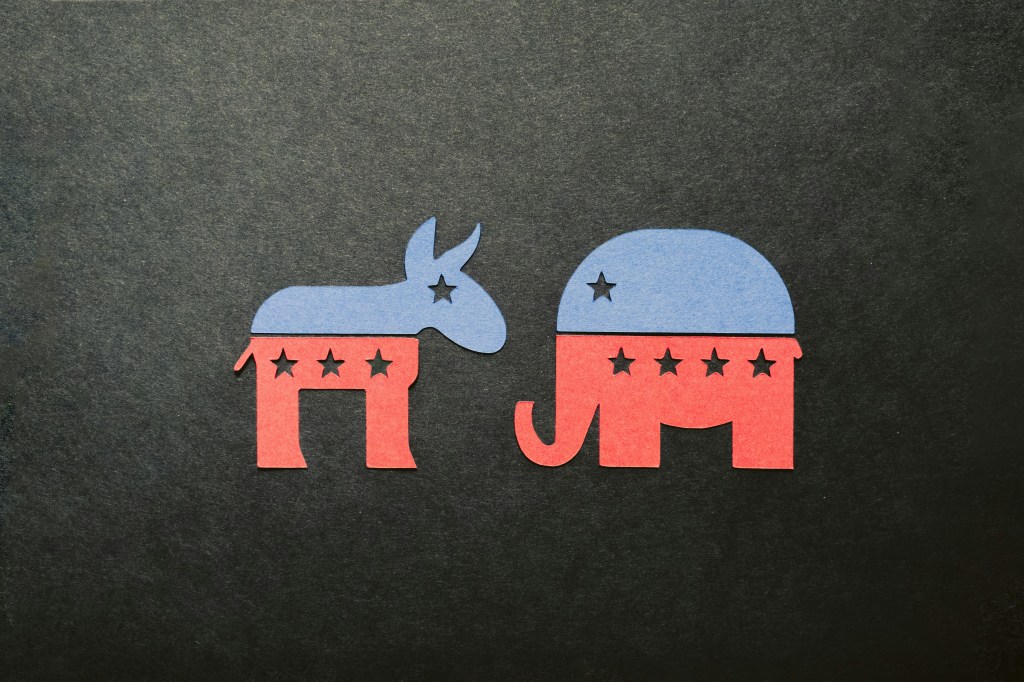
One emerging lesson is to avoid politicizing public health at the federal level – which is easier said than done in our times. While MAHA has captured support from those politically aligned with it, it has not gained as much support among people with divergent political views. Closer examination of the segments of the American population that continued to report distrust following COVID reveals that a major source of this lack of faith is deepening partisan division in government, so much so that political affiliation has come to affect trust in institutions such as the public health system. Survey data reveals that the dip in public health trust during the pandemic was largely reported by Republican-identifying individuals, while trust among Democrats actually remained fairly stable. Following changes in federal health leadership under the Trump administration, public health trust increased among Republicans and decreased among Democrats.
Another lesson is to remember that hyperlocal public health is best suited to respond to the unique needs of the local community – perhaps this is why communities continue to trust their local public health institutions to make the right decisions. State health agencies experienced much more stable levels of trust over time when compared to federal counterparts such as the CDC and National Institute of Health, which is also supported by recent developments such as state governments forming public health alliances with each other in defiance of federal recommendations. Such evidence reveals that as division persists, obtaining unified trust from the population will remain difficult–and thus any future approach to improving faith in the public health system should focus in part on bipartisanship.
Finally, another influence plaguing trust in federal public health institutions is the widespread proliferation of individualism, reflected not only in the international sense through the U.S’s withdrawal from multilateral institutions such as the WHO, but also domestically–as a longstanding ideology that has threatened the American healthcare system since during and even before COVID and that gave rise to MAHA.
The pervasiveness of American individualism was a major barrier to the success of public health initiatives during the pandemic: in a NIH article, scientists asserted that the individualist approach of both American society and government to COVID went against “fundamental tenets of public health that emphasize “what we, as a society, do collectively to assure the conditions for people to be healthy”.
Individualism not only discourages collective accountability towards ensuring public safety, but also creates disillusionment with federal institutions, whose missions seem unclear in terms of individual benefit – and even wasteful. The Hill reported in February 2025, the early days of the Department of Government Efficiency or DOGE, that 58% of Democrats and 75% of Republicans supported defunding fraudulent or wasteful spending.
Along those lines, the MAHA movement, championed by Robert F. Kennedy Jr., discourages support of broad taxpayer-funded federal initiatives that may not benefit every American but provide crucial support to those in need. Such individualist sentiment leads to perceptions of moves such as the recent vaccine schedule revisions as beneficial to individual agency rather than harmful to public health: yet, in the words of the American Medical Association, “moving away from routine immunizations…does not increase freedom–it increases suffering.”
It is thus evident that partisan division and widespread individualism must be addressed in order to facilitate a strong, stable public health system founded in unified popular trust. It’s a task easier said than done, but more necessary than ever before. Therefore, it remains crucial to rely on bipartisan narratives that place emphasis on collective good when it comes to public health. The efficacy of the public health system is dependent on trust–and future government approaches should center around targeting sources of distrust to strengthen the US’s public health efforts, both at home and internationally.

Monet Wright is a freshman at Georgetown University working towards a B.S. in the Walsh School of Foreign Service. Her interests in foreign policy include the intersection between international relations and scientific innovation. As a member of Georgetown’s Bipartisan Coalition, she is excited to use science communication to bridge partisan divides.
 Fancy Comma, LLC
One thought on “For better or worse, the US is charting new territory in health policy. What now?”