By Monet Wright
For 63 years, USAID lent a global helping hand. Six months into its closure, impacts already span the Middle East, Central America, Sub-Saharan Africa and South Asia.
The second Trump Administration shuttered USAID
Over the course of 2025, the second Trump administration systematically dismantled the U.S. Agency for International Development (USAID). They gradually terminated over 80% of its programs until it was formally dissolved on July 1st.
The administration bases its abolishment of USAID on mismanagement of its budget as an independent federal agency, citing wasteful spending on programs abroad that represent improper use of taxpayer funds. Remaining initiatives were absorbed into the State Department, where, the administration maintains, initiatives would be better implemented.
Significant concerns persist regarding the loss of so many USAID programs and a lack of State Department infrastructure to manage leftover initiatives. As developing countries begin to experience the harmful effects of losing the agency’s support, these issues remain more urgent than ever.
In this article, I talk about USAID’s role in positioning the United States at the forefront of global aid initiatives throughout its history as an organization. I argue that dismantling USAID’s crucial programs creates unaddressed humanitarian issues that non-governmental organizations (NGOs) and United Nations (UN) agencies are attempting to address. Lastly, I recommend ways for NGOs and others to try to fill the gaps.
USAID’s Historical Impact on Worldwide Humanitarian Relief
Areas receiving the highest amount of aid have tended to reflect the US’s current strategic priorities. The two largest recipients of USAID in 2024 were Israel and Ukraine, receiving $6.82 billion and $6.51 billion dollars, respectively, which was over triple as much as the next-largest recipients. However, USAID also supported other crucial programs around the world: in fact, 91% of countries received some form of aid from the US that same year.
In areas of primary aid concentration, such as the Middle East/South Asia, Sub-Saharan Africa, and Central America, USAID has critically impacted rates of child mortality (preventing approximately 30 million deaths in children under 5 over the last two decades according to one study), starvation and disease, with at least a quarter of its annual budget going to disaster response: which includes providing relief from crises from disease outbreaks to natural disasters and terror attacks. The rest of its budget goes to supplying medications, food, clean water, and assistance to farmers, women and children. And total USAID funding typically makes up less than one percent of the US’s total federal budget: for the 2024 fiscal year, it managed a roughly $35 billion-dollar budget, a miniscule proportion of the nearly $7 trillion total government spending that same year.
USAID’s history of leading humanitarian initiatives goes back to its establishment in 1961 under President John F. Kennedy, who brought new emphasis upon economic and social development within the US’s involvement abroad to facilitate international development. This became a cornerstone of USAID’s mission, which it would continue to carry out over the next seven decades.
Initially, USAID’s primary goals were to encourage the development of market economies in countries free from Communist influence and open those markets to American goods. This focus would shift multiple times before the turn of the century, though it always emphasized support to poorer nations. In the 1970s, Congress pushed USAID towards programs to meet the “basic needs” of people in developing countries by focusing on providing them food, shelter and basic public education rather than support for more modernizing-focused measures such as funding higher education institutions.
These initiatives continued when President Reagan took office in the 1980s, with a renewed emphasis on stimulating American business and helping communities enter a global market, such as through utilizing U.S. firms to complete modernization projects. When the Cold War came to an end in 1991 and the Soviet Union ceased to be a threat to American interests, USAID’s goals changed once again to involve facilitating democracy and sustainability abroad. And during this period, the agency also continued to broaden its operations by expanding the number of countries where it operated, collaborating with NGOs to assist regions that it could not personally pursue involvement in (i.e. where American presence was politically unfeasible), and beginning to provide aid to relieve nations in active crisis. Since the late 1990s/early 2000s, the agency’s projects have largely continued to reflect this broad emphasis on relief and development through a humanitarian, modernization-focused lens, while strengthening its partnerships with NGO and expanding its global reach.
In recent years, USAID has thus spearheaded some of the most internationally-significant humanitarian aid and relief initiatives towards accomplishing this mission. Between 2017 and 2020, USAID responded to 240 natural disasters and crises around the world, and in 2016 alone, it provided food assistance to over 53 million people across 47 countries. In the public health realm, the agency saved 6 million lives from malaria from 2007 to 2017, distributing mosquito nets and preventative medicine to protect millions more from the disease. It helped 9.5 million people receive treatment for AIDS through PEPFAR (which does remain operational under the State Department today), facilitated access to education for 52 million children and youth in just four years, and delivered sustainable energy programs in 20 countries–all of which represent just a fraction of the agency’s impact in the last fifteen or so years, given its many remaining programs that have made headway towards relieving the civilian impact of countless other issues.
USAID is, however, certainly not without fault in terms of the successes of its programs and management of its operations: contemporary issues and project failures frequently frustrated its goals over the last two decades leading up to its dissolution. For example, the US invasion of Iraq and Afghanistan in the early 2000s stretched USAID capabilities extremely thin, as it struggled to balance existing global initiatives with supporting crucial infrastructure in said countries during the war–which diminished the resources available for projects such as programs to support democracy in South/Central America and health measures such as global immunization through vaccine access. Moreover, agency management has been rife with extreme oversight failures and budget concerns, a major aspect of the Trump administration’s reasoning for dismantling the organization. In 2023, USAID failed to conduct legally-required reviews for over 70% of the international agencies receiving its funds, rendering it unable to access information about potential waste or abuse of funding.
Regardless, it remains that the USAID is a massive, critical source of support for developing countries, and these inefficacies are negligible compared to its overwhelmingly positive impact on the peoples of these nations–it remains that USAID programs do work. As stated by the president of Oxfam, a collective of 21 NGOs committed to ending global poverty, “there is not a single area of development and humanitarian assistance USAID has not been involved in.” Analysis over the past thirty years reveals that extreme poverty has fallen from 36% to 10% of the world’s population, global life expectancy has risen 6 years, and maternal and child mortality rates have been cut in half: concrete evidence that aid initiatives are successful.
Moreover, other scholars such as those at the Brookings Institution argue that the inefficacies cited above are not as detrimental to USAID operations as claimed (or as non-reformable), and state that other methods of institutional review have been successful at ensuring its measures work: according to Brookings, “The U.S. government requires regular monitoring and reporting on how and whether assistance programs are working, and periodic evaluations of results. There is hard evidence that development and humanitarian programs produce considerable results.” And while proponents of the agency’s dissolution argue that America contributes too much to foreign aid as opposed to other nations as the largest provider of assistance in the world, its contributions are in reality more than appropriate as the world’s wealthiest country–in fact, the US contributes only 0.2% of its annual GDP to the USAID budget, less than the 0.4% average for wealthy nations (you can read more myths about USAID at the here).
The bottom line is that considering its long history of real humanitarian impact, and its meager portion of the federal budget, the shortcomings of USAID pale in comparison to its benefits, and the results of its dissolution are overwhelmingly negative.
What happens to the world now, post-USAID?
So, how do the consequences of USAID’s dissolution stand to unfold? One palpable impact is increasing mortality rates in aforementioned areas of aid concentration, including countries across the Middle East, Central America, Sub-Saharan Africa and South Asia. A study published in science journal The Lancet found that, even ahead of the complete dissolution of USAID, steep administrative funding cuts to the agency could result in more than 14 million additional all-age deaths by 2030, including 4.5 million children younger than age 5, based on a forecasting model that utilized data from 133 countries to evaluate the impact of the agency’s funding over the past decade.
As for region-specific harms, due to the wide-ranging support provided by USAID programs to developing countries, it follows that the removal of USAID programs have been especially detrimental to those that receive the most aid, such as Jordan, Egypt, Ethiopia, Nigeria, and Somalia, all of which were recipients of over a billion dollars from USAID in 2023.
To focus on one particularly significant example, Jordan was the third-largest beneficiary of United States foreign aid in 2024, after Israel and Ukraine, due to its substantial economic, infrastructural, and humanitarian vulnerabilities: which include its large refugee population, persistent poverty and governmental instability. That year, the nation received a total of 1.7 billion dollars from the U.S.: funds that went to various assistance measures supporting economic development ($883 million of total aid), protecting access to water and healthcare, combating poverty, and the Jordanian government. Such comprehensive American support to Jordan has followed a decades-long tradition of similar assistance as its largest external backer and close diplomatic partner until the ultimate shutdown of the agency in July. The closure of USAID not only ceased meaningful American support to Jordan but also removed implementers conditional to certain International Monetary Fund (IMF) or European Union (EU) funding programs, cutting the nation off from millions more in global aid.
As majorly reliant on USAID faculties and funding, the people of Jordan stand to experience acute consequences from the shuttering of USAID, including disastrous ramifications across education, public health, water access, poverty and economic stability, especially for its most vulnerable populations of women, children, and refugees. Moreover, the halting of USAID-championed economic development and modernization initiatives due to lack of funding poses additional long-term consequences for the country.
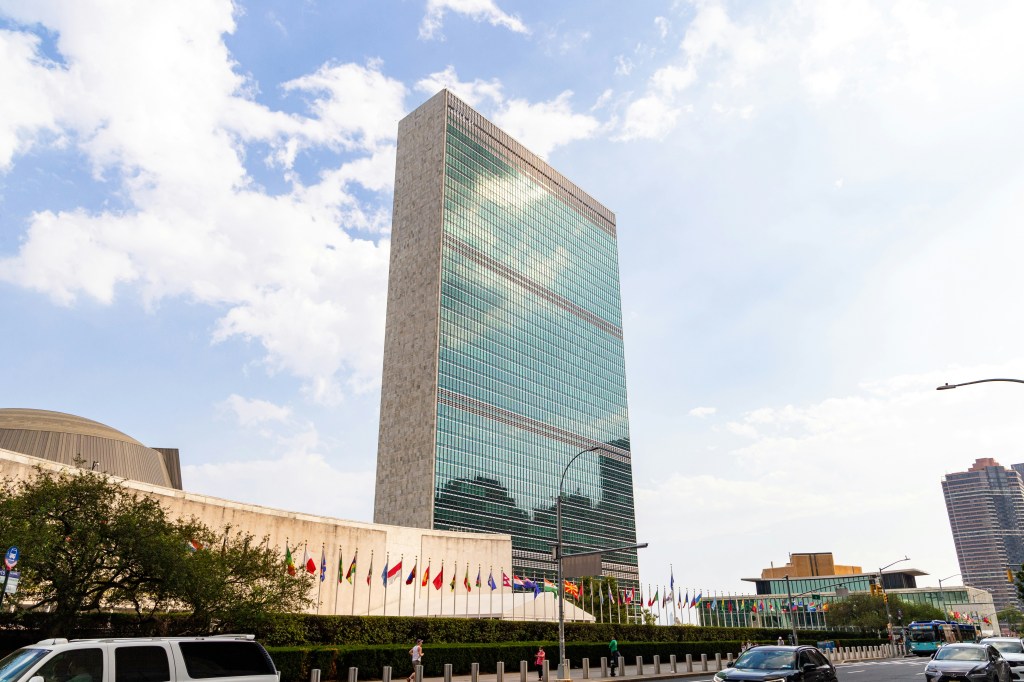
For the most part, NGOs, UN agencies, and other multilateral organizations are the primary institutions that have been left to compensate for the massive vacuum of support formerly provided by USAID. These bodies have also suffered resource loss from the shutdown, given USAID’s wide network of partnerships with and funding contributions to such institutions. The reality is that such organizations have nowhere near enough resources, monetary or otherwise, to fill the gap.
Other actors, such as private and public philanthropies, have ramped up their own initiatives in an effort to make resources available to NGOs: for example, the organization GiveWell has contributed $50 million to support international relief organizations thus far. Bill Gates recently donated $200 billion dollars on behalf of the Gates Foundation, which, as he stated, was not influenced by agency cuts. These actors are playing a far more vital role than before as suppliers of grants. However, in general, NGOs have been forced to strategically suspend vast portions of their operations to allow only their most vital activities to continue.
The ramifications of the shuttering of USAID are severe and far-reaching. In terms of future directions, the most ideal course of action would thus be a future reinstatement of the agency, but this remains unlikely under the current administration and so would not occur for at least another few years. In the meantime, humanitarian organizations have no other option but to scale back operations while tentatively pursuing new models of providing aid that are far less reliant on government funding support, USAID or otherwise. It is unclear, and unlikely, that alternative, private sources of support will be able to adequately soften the blow of dissolution–but regardless, millions of lives continue to hang in the balance.

Monet Wright is a freshman at Georgetown University working towards a B.S. in the Walsh School of Foreign Service. Her interests in foreign policy include the intersection between international relations and scientific innovation. As a member of Georgetown’s Bipartisan Coalition, she is excited to use science communication to bridge partisan divides.
 Fancy Comma, LLC
