By Sheeva Azma
“Scientific discovery often happens without us realizing it, as a result of a lifetime of thinking about the world through the novel scientific lens that we as scientists have.”
As a way to decompress from the stress of navigating the 2024 election cycle, I decided to do something I had wanted to do for several years: get serious about my scientific endeavors! Working on science is something that I really love and one of the things that gives me a great sense of purpose. Therefore, I’ve been working to publish my graduate work on stress, trauma, and addiction, and launch a novel research project on journalist PTSD, submitting two papers (one published and one in press!) and working on a third one.
I am also now an independent researcher, obtaining no taxpayer funding, and trying to make the most of taxpayers’ investment in me (as well as my own scientific curiosity) as a Seeds of Science researcher. So, you might see more of my work on Google Scholar soon. You can still hire me, but now I have a tiny little neuroscience research niche carved out. It is always difficult to start something completely new; sometimes the world is not ready for thinking about it, as I have learned.
It has been a weird few years for my science career, especially considering I left grad school in 2014 and did not really look back too much. I never thought of myself as a “real” neuroscientist in grad school. It actually took leaving graduate school to make me seek out ways to explore my interests in neuroscientist, thereby making me more of a “real” neuroscientist. What a paradox!
Maybe my path towards and then away and then back to science is all because I am one of those people who always knew what I wanted to be when I grew up — or at least told everyone I would be a brain surgeon when I was a kid, and did not stray too far from that as a neuroscientist. Indeed, being freelance is fun since you can follow your lifelong interests. I’ve already talked about how I got into political advocacy and organizing, not to mention science policy, as a scientist – check that out here. If you are interested in my path toward science writing after leaving science, check out my Xylom article on the subject.
Want to know more about how I got into science and transitioned to science writing, as a scientist? Keep reading!
(By the way, writing this was fun! Taking the time to reflect helped me feel more like a real scientist. I also learned that being a neuroscientist is more than working in well-known labs. It’s also about following your own annoyingly persistent curiosity and never giving up, even in the face of impossible obstacles. I highly recommend trying to write your science story and see what kind of insights you come up with!)
“Do you think you would go to MIT if you got in?” my high school math teacher, who was also my academic advisor, asked. “Yes, obviously,” I replied. One day, I was walking on campus, and a kid approached me and said, “Congrats on getting into MIT.” I was weirded out – I had definitely gotten put on the waitlist, and though my family kept telling me they knew I’d get in, I had not received word.
A couple of weeks later I graduated high school. I was valedictorian and, all thanks to my excellent speechwriting abilities, a graduation speaker! Our class officers chose the graduation speaker based on a speech that we had to write and provide to see if it would make the cut. I have a vague memory of coming up with a speech really quickly in the school library. I told my classmates that we’d all be successful someday – maybe with even an astronaut among us? – and to never give up on our dreams. I still have my speech!
A few days later, I got a huge red letter in the mail. It was my acceptance letter to MIT, with a hefty student aid package to boot. I had just accepted a full ride to our local state university, but after talking to my parents, quickly decided I would attend MIT. The next few weeks were super hectic preparing for college, but I had made my choice. I wanted to attend the most prestigious science and technology university in the whole world. I had never thought of myself as a scientist, but now that I had the opportunity to study science almost exclusively, I didn’t realize that it would become pretty much the main thing I would do for over a decade.
Unfortunately, a couple of weeks after I got to school, 9/11 happened. I had a freshman seminar with Herman Aisen, a famous researcher who was known for his study of antibodies. After 9/11, someone had decided to mail letters laced with bioweapons to Congress. In our freshman seminar, Dr. Aisen told us about various aspects of bioweapons and why, despite the Pentagon’s worst fears, they would not work at scale. People would never be get sick en masse that way, my professor explained, so we could all rest assured that the experts did not know what they were talking about. While in such a scenario MIT would have the brightest minds to talk to us, such a thing was, for whatever reason, not possible. In the pandemic, Anthony Fauci lectured in an MIT biology course, by contrast. In the worst of the pandemic, feeling a similar feeling of national crisis that we all faced as a nation in 9/11 (except this time global!), I found it weird to remember that I had taken a whole course on antibodies and people’s worst fears, now realized.
Those first few months at MIT I spent adjusting to new surroundings. I was majoring in Chemical Engineering – with dreams of becoming a doctor. Unlike Oklahoma, it seemed like biotech and science was everywhere in Massachusetts. The political atmosphere in the land of the Kennedys also could not have been more different. It was weird to be among a political majority as a Democrat in some ways. I loved MIT, though – it was a nerd paradise. I had never been surrounded by so many people that were living their nerdiest, best lives.
MIT classes seemed tough for me, a public school kid. I had never taken classes that were so fast-paced. The first one or two weeks would be relatively easy, but then after that the coursework became overwhelming. MIT peeps famously liken the MIT experience to drinking from a firehose: yeah, you can drink from it, but it will get water everywhere, and definitely be an unpleasant and overwhelming experience, even if it quenches your thirst. We were constantly “hosed,” which is MIT-speak for having too much work. “Sleep, work, or friends: pick two” was a common mantra, and, of course, being the nerdy social butterfly I am, I picked friends and work! Here are some examples of my hosedness as an MIT student:
- On a physics quiz on which I was supposed to use the right-hand rule, I used my left hand, and got all the answers wrong. When I went to my TA to ask for partial credit, they said no.
- Studying for exams was often impossible, as the professors would make the exams difficult on purpose or force us to try to analyze the data in a new way (so stressful!). In my chemical engineering courses, it was customary for me to have a score of something ridiculous like 20% (or less!) translate to a C after the curve.
- One semester, classes were so overwhelming that I had to prioritize which homework I would do (and regularly did not do homework, or slept through classes because I had stayed up too late studying).
(I could go on, but who wants to read a blog that is just a play-by-play of all my many stressful college experiences? Just thinking about some of them makes me anxious.)
MIT science classes were the hardest classes I had ever taken in my entire life. Sometimes, I would try to Google the answers to homework, only to find the homework itself.
My first year was pass/fail, and I passed all my classes. The second year was when things started to get dicey as a chemical engineering major. In one lecture, the professor wrote a really long equation on the board. We all looked perplexed. Then he crossed out stuff that we didn’t have to think about and the equation became much shorter. To this day, I don’t remember how or why he did that, or why that was even possible. While I loved both chemistry and engineering math, I soon realized MIT chemical engineering was not for me. Maybe at a state school, I could have done better, but I didn’t have the passion for chemE that my peers did. My chemE courses were so difficult that I, previously a lifelong straight-A student, got two C’s, a C-, and a D my sophomore year spring semester.
As I worked on cancer research that summer (which was amazing!), I began to accept defeat in my engineering endeavors and considered changing majors. When I had applied to MIT, I had stated that I would study brain and cognitive science. I started my junior year as a chemical engineer, but three weeks into the semester, I was already super overwhelmed. I convinced a professor in the Brain & Cognitive Sciences department to let me take his neurobiology class so I could study neuroscience as my major. I convinced him well enough of my love of neuroplasticity that I was able to change majors almost a month into my junior year, and I worked hard to graduate in four years.
No longer living in a world of incomprehensible equations, I was free to be a more literary version of myself that didn’t feel like it felt the MIT mold, at least to me, though in reality it was just another facet of life at the ‘Tute, as we sometimes called it. I watched Noam Chomsky speak about linguistics and performed brain dissections. I published articles in the joint MIT/Wellesley literary magazine and made friends with creative, artsy people who preferred nerding out about neurolinguistics to poring over tons of engineering math (not that I don’t like math; I love math!). I minored in psycholinguistics, and got to take classes in the Stata Center, a funhouse-looking building built atop Building 20, the old, makeshift building which for years was home to both Noam Chomsky and the Manhattan Project.
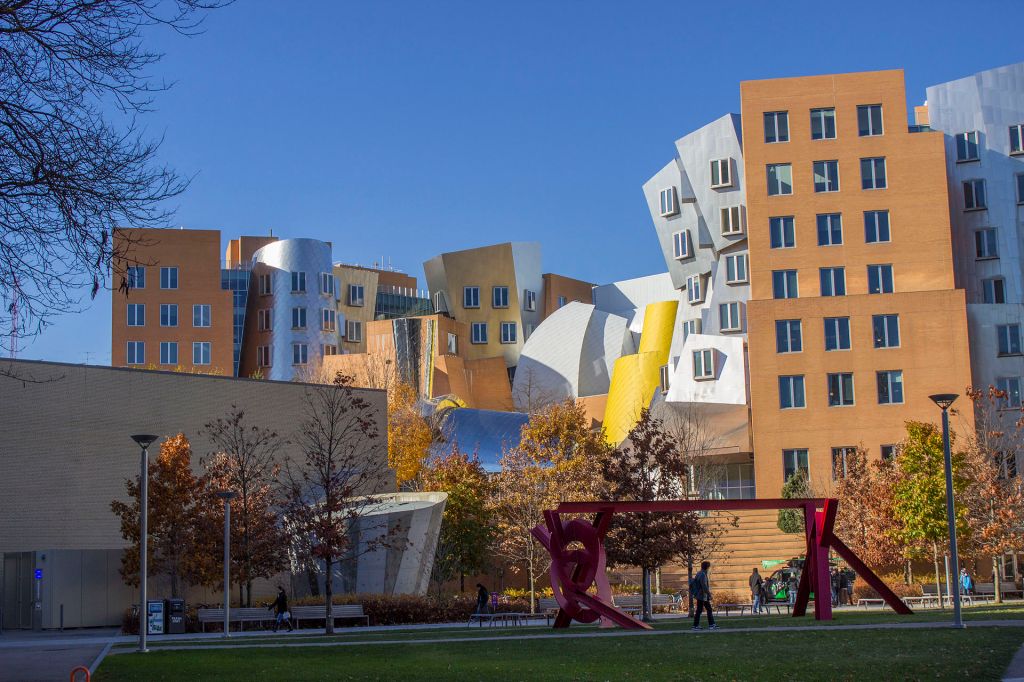
To my friends, I became a quirky girl who was good with puns and liked brains and language. I would often explain the differences between actual brains and artificial intelligence to my friends studying computer science. A lot of the conversations I had with my classmates were more valuable to my career than the classes I had to take. I guess that was, in part, because I sought out learning experiences to quell my natural curiosity and desire to be doing something cool and interesting to tackle big challenges (or at least learn more about them).
I faced a challenge in figuring out what I wanted to do with my career as my time as an MIT undergrad ended. I had started out pre-med, but am stubborn and do not often like to admit defeat, and sadly, by the end of my sophomore year, I had ruined my GPA as a chemical engineer, which ruled out medical school. So, I decided to go to graduate school instead. I decided to apply to research assistant positions in Boston, and was excited to land one before the end of my last semester at MIT!
I had learned about functional magnetic resonance imaging or fMRI, which was a new technology at that time. Technically, fMRI had three birthplaces: one somewhere in Japan, one at the National Institutes of Health, and at Massachusetts General Hospital, where I had previously did cancer research. The Martinos Center, located in Charlestown, MA, was a separate research facility where all of the fMRI facilities were located. Working there was my first “real” job after college, and I found it really cool and interesting to be able to look into the brain using neuroimaging!
In my new role, I would basically do everything a scientist does. I was the lab’s only research assistant and wore many hats (as I do now, running Fancy Comma). Eventually, the lab’s staff would triple, but for a couple of years, it was just me. I used my MIT nerd background and problem-solving skills to get several projects off the ground. I programmed the stimulus presentations our subjects would see in the scanner, scanned patients in the MRI machine, recruited study participants, and coordinated participant visits. I also created experimental paradigms, collected and analyzed behavioral and MRI/fMRI data, as well as another type of neuroimaging method called magnetoencephalography (MEG). I put my editing skills to work and helped my supervisor win a grant from the NIH, which was a big deal because it meant that we could do even more studies.
After a couple of years, I applied to graduate school, and got into several programs. I also applied to the National Science Foundation Graduate Fellowship, proposing to study the brain’s language faculties and metaphor processing using fMRI. I ended up receiving an honorable mention for this project, in part due to my “outreach” activities, which included teaching science to high school students. As a college student, I was part of the Brain and Cognitive Sciences Society and the MIT High School Studies Program. In what was my best outreach event possibly ever, I and my MIT classmates had procured sheep brains from our department, and hosted a sheep brain dissection for local high school students. I would go on to teach medical neuroanatomy to students at Georgetown University also. I also wrote a guide to navigating the Brain and Cognitive Sciences major which we called Tract9 (at MIT, majors are numbered, and Brain & Cognitive Science is Course 9). MIT BCS for life!
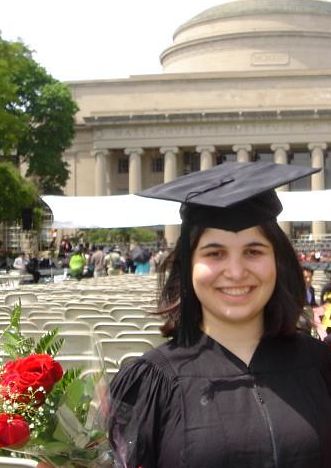
I looked forward to the so-called “outreach” activities because even though they seemed to detract from science, and none of the scientists really had time for them, I honestly enjoyed the opportunity to converse with people outside of the ivory tower – who I considered to be “normal” people back then.
I applied to several grad schools a couple times and the second time, I got into six or seven schools. Traveling across the country for interviews season, I only really wanted to go to Georgetown due to its location in Washington, DC and proximity to the science policy scene. I was excited to be admitted and accepted immediately. They wrote bios for each of us to introduce us to the program. Neither my bio nor my name are listed on the program’s website anymore, but here is the bio they wrote me, for posterity:
“Sheeva earned a B.S. in Brain and Cognitive Science from MIT in 2005. As an undergrad, Sheeva had diverse research experiences in math, anthropology, behavioral pharmacology, speech, and visual psychophysics. In her senior year, Sheeva joined the lab of Dr. Pawan Sinha, where she designed an experiment to test the threshold for the visual recognition of emotions in sequences of visually degraded images of faces. She presented her results in a poster session in the spring of 2005. After graduation, she took a position as a full time research assistant in the lab of Dr. Ksenija Marinkovic at the Massachusetts General Hospital, studying the effects of alcohol intoxication on response conflict and cognitive control, using fMRI and EEG/MEG measurements of neural activity. Her research contributed to two abstracts at the 2006 SfN meeting, on one of which she was the presenting author. Sheeva has contributed to the design of stimuli and research protocols, data acquisition and analysis, as well as the training of visiting fellows. Sheeva served for two years as one of two student representatives for a subcommittee of the Committee on the Undergraduate Program at MIT which dealt with the establishment and oversight of policies for a new undergraduate requirement. Sheeva is especially interested in human cognitive neuroscience. In particular, she is fascinated by the pathways that underlie language processing, and hopes to have the opportunity to study language-brain connections in both normal individuals as well as in developmental disorders and neuropathological conditions.”
I packed up my belongings and moved from Boston to Washington, DC, where I would spend the next seven years. It was fun to move to a different, yet still walkable and exciting, East Coast city again, and I also appreciated DC’s milder temperatures. I was also amped about the chance to do science and perhaps get into the science policy world.
I hit the ground running, so to speak. Our program gave us the chance to do three to four research rotations before deciding on a “home” lab, as well as the option of doing offsite rotations outside of the university campus. I was the only student in my program to do an internship at the Washington, DC Veterans Affairs Hospital, where I applied my technical expertise in experimental design to solve problems and create an anti-saccade task examining eye gaze in people diagnosed with schizophrenia. As part of my work, I would also be present at structured clinical interviews for schizophrenia, and part of the questionnaire involved asking people who the mayor of Washington, DC was, as well as the President. Weirdly, nobody ever got those questions wrong. Washingtonians really know their city, I guess.
After interning at the VA, I did a few other rotations, and then joined an imaging lab where I did my Master’s research. In my mind, it was like a mini-Martinos Center – even the MRI scanner was the same Siemens scanner.
One thing I really liked about Georgetown was my freedom to pursue research that I really enjoyed. My advisor gave me a choice of three projects to pursue my PhD. One involved studying the brains of patients diagnosed with Post-Traumatic Stress Disorder or PTSD. I was really excited about learning more about PTSD and opted for that project. For several years, I learned about the PTSD decision-making literature and the neurological effects of stress and trauma on the brain. It was an amazing deep dive into the literature that has shaped my thinking ever since.
For the next few years, I dug into the literature on decision-making, including a specific type of financial decision-making called delay discounting. Delay discounting has been studied by behavioral economists extensively and its patterns are different in people suffering from various neuropsychiatric conditions. I spent several lab meetings explaining delay discounting to my advisor, who pitched a delay discounting paradigm as part of a grant proposal, winning the lab a grant from the National Institutes of Health studying adolescent decision-making as related to familial risk of alcohol use disorder. Yay, I came in handy to help land an NIH grant again!
Over the course of my time at Georgetown, I worked on several projects. My PhD work had two different prongs: one project involved the brain basis of PTSD and the other involved the neural and behavioral signatures of alcoholism risk. Sadly, though I achieved PhD candidacy, my PTSD project ran into methodological problems, and by the time I started my new project, I had already spent more than five years at Georgetown. While I assured my thesis committee I could still complete my PhD promptly due to my skills in MRI data analysis and I had already written the intro to my thesis, they suggested I leave with my Master’s, so I did. I recently learned, submitting a paper with a grad-school-era colleague in August 2024 about my work, that low-powered studies do have some benefits, such as “deep phenotyping” of various conditions studied.
Although I left my PhD program, I didn’t leave Georgetown, nor have I been able to disentangle myself from the intriguing world of neuroscience since. I volunteered in a neurogenetics lab, where I got to return to benchwork, which I had done at MIT but now missed. I performed my first PCR since 2003 – while the process was more streamlined in 2014, it was all still super complicated and didn’t work the first time, just like I remembered. (I have not done any PCR since then – the thought of doing so gives me some anxiety!)
The lab combined genetics with neuroimaging, and also had a bunch of other projects relating to cognition, and I lent my skill in experimental design and Linux hacking to help the undergraduate research assistants. I learned how to use Qualtrics, which is a software program used for collecting data from study participants. When I later moved to OK, I also worked remotely designing stimuli.
As a newly minted Master’s graduate, I also had the opportunity to present my research about the effects of stress and trauma on the brain at the National Museum of Health and Medicine in Silver Spring, Maryland. Even though I love public speaking and teaching, I was really nervous to be giving a public lecture to an audience that included doctors and veterans alike. Afterwards, people asked me questions about the talk, and I was invited to present at a lab at Georgetown about my research, also. It was cool to do a research tour of sorts, even though I had not been in academic science for several months at that point!
The transition from academic life to the writer’s life was bizarre more than it was difficult. At MIT, I had internalized the academic way of life, and now I was completely out of my element. What’s more, in my new life as a freelance writer and then DC insider, I rarely thought about my research except in terms of its impact in society. It wouldn’t make sense to think about the intellectual aspects of my research, since I had no scientist friends I could nerd out with anymore living in Oklahoma. The local university did not even have a neuroscience department.
When I worked in Congress in early 2017, when I copyedited a press release about Veterans, I remembered my PTSD research and wondered about the state of the field. I also thought about it while reading the latest news from the ongoing wars in Iraq and Afghanistan. However, I had nowhere to talk about my research, because I was no longer around scientists. I lived with my parents, and I really did not want to talk about my research with them, although they found it interesting and said I did a good job of explaining it.
I did not want to be in the “real world;” I missed academia terribly. I daydreamed about completing my PhD. I reapplied to my graduate program at Georgetown so many times that I got banned from applying. Nobody seemed to understand what I was doing in my new life as a freelance science writer, but then again, they also didn’t understand neuroscience, either.
All of my friends were doctors and lawyers, and here I was hunched over a laptop all day. I felt confused about this new path in life. Yet, it was the only thing I felt capable of doing – and I was good at it.
When I first started writing more in undergraduate and grad school, it was because my professors told me science has a lot of writing, and I wanted to be a good scientist. Then, when I left science, writing became a craft I honed over the years, first as a side hustle while I looked for other jobs, first as a side hustle, then as my full-time job. Now that I am a writer, writing about science is a lot easier, but I am no longer in academic science. I still have the same questions about the brain that I had in grad school, but now I have the time and innate curiosity to try to figure out the answers.
As of writing this in September 2024, I have already submitted two publications this year: one to the journal of Alcohol, Clinical and Experimental Research (which just got accepted!), and one to Seeds of Science (which also was accepted and is now published!). I am also working on a third publication about the neurobiology of PTSD. I am excited to share more about that as my independent research progresses.
It feels amazing to be able to grow my skills and continue to contribute to neuroscience, especially after leaving my PhD program, when it felt like all of the science “doors” were closing on me. There was nothing more empowering than submitting my own first-author paper to a science journal a decade after my own professors told me I was not capable of doing science. Even still, I realize am more privileged than other students whose careers ended after they were forced out of their PhD, and who cannot follow their scientific passions anymore. There is a huge culture change that needs to happen in our graduate science programs if we are to have a STEM workforce that represents US society.
I wrote this blog post to help people understand that you can do science outside of academic science. If that means persevering despite naysayers, or never talking about your work to certain negative people, or figuring out a way to repurpose the skills and knowledge you learned in grad school to be able to publish independently, so be it.
One thing I have learned is that scientific discovery often happens without us realizing it, as a result of a lifetime of thinking about the world through the novel scientific lens that we as scientists have. I really wish more scientists would realize that a lot of scientific work happens during the time not in the lab. Lived experiences are undervalued in science (to say the least) but they are part of being a human. If scientists prioritized and valued lived experience more, then maybe that would give them a buffer against the negativity they experience in science day after day.
 Fancy Comma, LLC
.JPG)
3 thoughts on “How I Left Academia and Became a Neuroscientist”