By Sheeva Azma
The Iran War is unconstitutional, expensive, and a bad example for the world.
Anyone who has read the Constitution knows that the president cannot just wake up one day and declare war on a nation — even though, basically, that’s what happened in the Iran War. The US Constitution gives Congress the power to declare war in Article I, Section 8, Clause 11. This is called the War Powers clause.
The United States and Israel began the Iran war on February 28, 2026. They killed the Supreme Leader, Ali Khamenei, on that day. There was “relief, disbelief, and anxiety” among Iranians, per CNN.
However, just a few days later, the British Broadcasting Company wrote, “We still have no idea where this war is heading.”
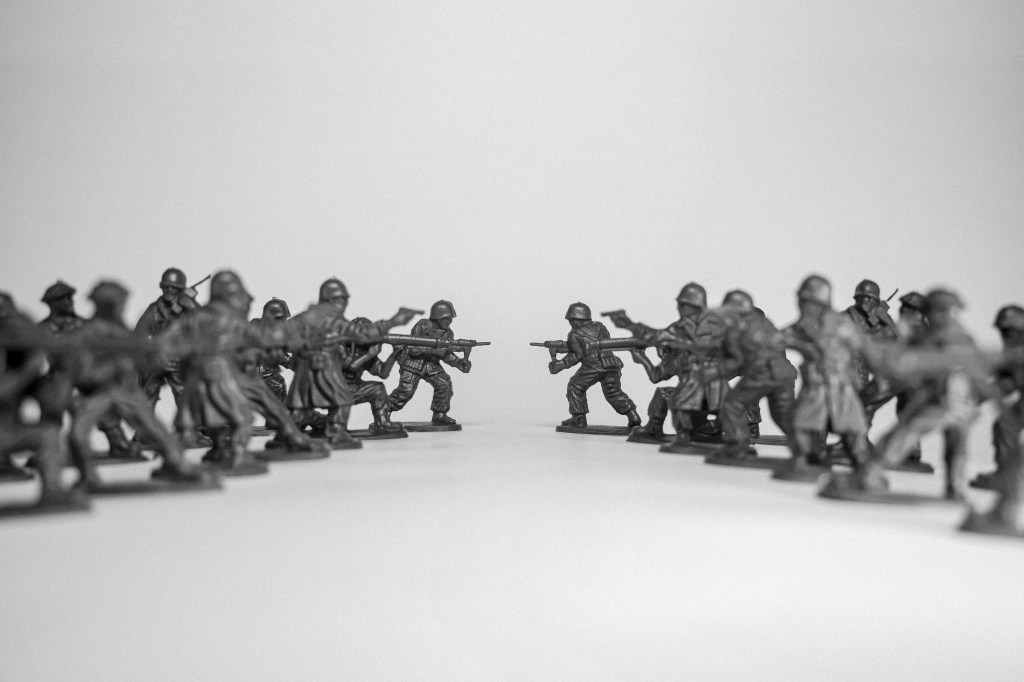
The goal of the US military action — called Operation Epic Fury — is to “dismantle the Iranian regime’s security apparatus, prioritizing locations that pose an imminent threat,” according to the US Department of War.
That mission has not been accomplished. I mean, maybe it has, in terms of degrading Iran’s military supplies, but now the US faces a munitions shortage, and Iran, now weakened militarily, can always build their military supplies back up.
Some of the excitement behind this war was the prospect of regime change in Iran. That has definitely not happened. Iranians now state they feel “doomed.”
I wrote on Persian New Year 2026 that “I hope this will be the greatest year ever for the people of Iran” but it is not.
I didn’t realize we would enter a full-on war with the brutal regime that has no regard for its own people, let alone US servicemembers.
The US and the Islamic Republic of Iran can try to sign as many ceasefire agreements and nuclear deals as they are able to do — even after President Trump basically making fun of President Obama for doing the same thing — but it won’t work.
It won’t work because the US is not a good model for freedom and democracy at the current time. In fact, “authoritarian populism” is sweeping the globe, according to the Harvard Kennedy School: “[T]he erosion of democracy today does not come via military coup d’état—rather, it comes by elected political leaders who, once in power, begin to progressively deconstruct the pillars our democracies,” they write.
It’s odd, in a way, since the Iranian Revolution, which gave rise to the current government, was an authoritarian populist movement mostly led by students at the time (they would be in their late 60s today).
The Make America Great Again (MAGA) movement is also a populist movement. One could argue that it has authoritarian elements that undermine democratic norms.
I get the feeling that there are many PhD theses to be written about this topic.
In any case, I don’t know how much longer I will have to watch incomprehensibly complicated war news, but I don’t like it. The Iran War has been an expensive side quest for US taxpayers. I don’t even think I could tell you who is involved at this point and what their allegiances are — and that’s what I think is the scariest.
The Iran War needs to end. It is a failure, but somehow, it keeps going on and on, causing more death and chaos, and bringing us new horrors like AI-assisted warfare going awry, about which The Guardian tells an interesting backstory.
I could have written pages and pages of Iran War policy analyses at this point, if I had any spare time…but I don’t. This economy is not great for a freelance writer in the era of ChatGPT, let alone with high grocery and gas prices and ballooning healthcare costs.
I’m also not one of those people who says “there is no money” for stuff. I fully believe there is money for Medicare and Medicaid and even the Affordable Care Act (which is my healthcare!). We also totally have money to help the people of Iran — even if we no longer have the humanitarian infrastructure to do so, with the dismantling of USAID, for instance.
So, instead of being one of those negative Nancy “we don’t have money” people, I will just point out the hypocrisy in waging an expensive war at a time when the government had announced they were cutting corners — that’s why they fired all those scientists, allegedly, in the DOGE era. That’s also why they disbanded the food safety protections needed to avoid Cyclospora outbreaks!
As the CEO of a science and policy consulting firm, it is my job to point these things out. I have done my fair share of analyzing different wars but they have never been chaotic to the point of being nonsensical.
Policies have to actually help people…otherwise, they are bad policies.
What the experts have been saying
The Iran War continues to drag on. There are pluses and minuses, for sure, but most Americans oppose the war, and it’s their tax dollars, so that, to me, says a lot. The actual number, according to Nate Silver, is only 56.4% opposed and 36.9% support. That is per the website on August 17, 2026, which is the day I am writing this.
As early as March 20, 2026, the Cato Institute, a libertarian think tank, had already called the military actions a “strategic failure.”
Georgetown’s School of Foreign Service served up some helpful policy advice in an article published on March 26, 2026: “The war against Iran illustrates how military intervention in a complex and highly securitized state can rapidly evolve into a protracted and multidimensional conflict involving proxy warfare, cyber operations, maritime disruptions, and economic shocks,” they said. They also provided a list of policy recommendations about how to move forward. They suggest multilateral efforts are needed, like coordinating with the International Atomic Energy Agency (IAEA) and the United Nations, and leveraging regional partnerships who can help out with keeping tabs on Iran.
We’ve written before about why unilateralism doesn’t make sense in global issues, namely climate, but it also applies to wars.
The Georgetown article ends by saying that the US “should avoid a large-scale ground intervention” and by reminding the reader that the US learned some lessons from its wars in Iraq and Afghanistan about the “immense human, financial, and strategic costs of prolonged interventions, and a long war in Iran would likely overstretch U.S. military capacity, weaken its ability to defend allies and economic interests in the Gulf, and undermine credibility among partner states hosting U.S. military bases.”
The Heritage Foundation, a conservative think tank now famous for its Project 2025, which was the blueprint for Trump 2.0 policies, has stated support for the ongoing war.
“I think this administration can do a lot to keep peace and stability in the region,” James Carafano, Vice President of the Davis Institute for National Security and Foreign Policy at Heritage Foundation, has stated on the Iran War. He states, in that article, his alignment with the Trump administration’s military action, citing the role of the Iranian government in backing regional “surrogates.”
We should lead by example
I’m all about smart people coming up with good ideas to de-escalate the War in Iran and to help the people of Iran be able to select a government that serves their best interests (this has not been great for them).
For a country at war with an authoritarian regime, the US is sure echoing a lot of their policies. Some of the things happening in the US today are actually unthinkable to us, but mirror daily life in Iran, where you can get executed for being in a rock band.
In America, these days, you can be “disappeared” while walking to work or for looking a certain way (that feels weird and chilling to type in 2026). You can be excluded from a government job for not being ‘loyal enough‘ to party politics. You can even die protesting the government’s authoritarian crackdown on immigration policy — that’s what happened to both Alex Pretti and Renee Good.
So, until we can fix that, we should probably stop trying to fix it for other nations.
When I was working one of the stupidest, hardest jobs of my life, which was being a middle school substitute teacher in an underresourced area, this random nugget of insight came to me by way of a sticker on the bathroom mirror:
“We can’t change others; we can only change ourselves.”

