By Sheeva Azma
Have you ever started writing a science communication explainer as a scientist, only to wonder: “What do people actually want to know about this subject? What are people saying about this subject? How are people talking about this subject, if at all?”
That’s where social listening comes in! The phrase “social listening” is a concept from the digital marketing world, but you can obviously chat with people in reality and figure out what they’re curious about in your science communication, and develop science content based around that.
What is Social Listening?
Social listening is a concept in the marketing world and is one of the most democratic forms of content research. That’s because it involves taking to the internet “airwaves,” so to speak, to see what people are saying about a topic. It involves reading through people’s social media posts to see what is being said on a topic. Social listening also includes figuring out what people are searching for online to learn more about a given subject. Major companies include social listening in their customer service strategy so they can stay on the same page as the people they serve with their products.

Social listening is not just for marketing. Scientists can use social listening, too. The general public has a lot of questions about science. They take to Google to get answers every day. How can we harness this to produce more engaging science communication that answers people’s questions?
Keep reading to learn one way I used social listening to create a social media science communication strategy for my client, a biotech company. Below, I detail five simple steps to use social listening for content creation in the sciences (or in any field, really).
Five Steps to Using Social Listening for Content Creation
My approach to social listening, as detailed here, uses a website called AnswerThePublic. AnswerThePublic is a way for you to find out what people are searching for on Google, Bing, and other websites about a given keyword or keyword phrase.
However, your social listening approach could be much simpler. You could go to Twitter/X, for example, and type in a keyword in the search box, and see what comes up, both in real-time posts and in top results. Voilà! Now you are up-to-date about what people are saying about your topic online.
- Go to AnswerThePublic.com. Register for a free account.
- Type in your topic and press enter to do a search for it. (As of writing this blog, free users have the ability to search for three keywords or phrases per day without paying.)
- See what comes up! Scroll through the report AnswerThePublic generates for you. It contains both keywords people are searching for and questions people are asking.
- Use the report to inform what you will talk about and how you will talk about it – in other words, your content strategy.
- Come up with your content.
That’s it!
Example Search with AnswerThePublic
I used AnswerThePublic to write our frequently asked questions article about unethical communication. You can read that here. To demonstrate how to use AnswerThePublic, I recreated that search.
First, I went to the website and typed in “unethical communication.”
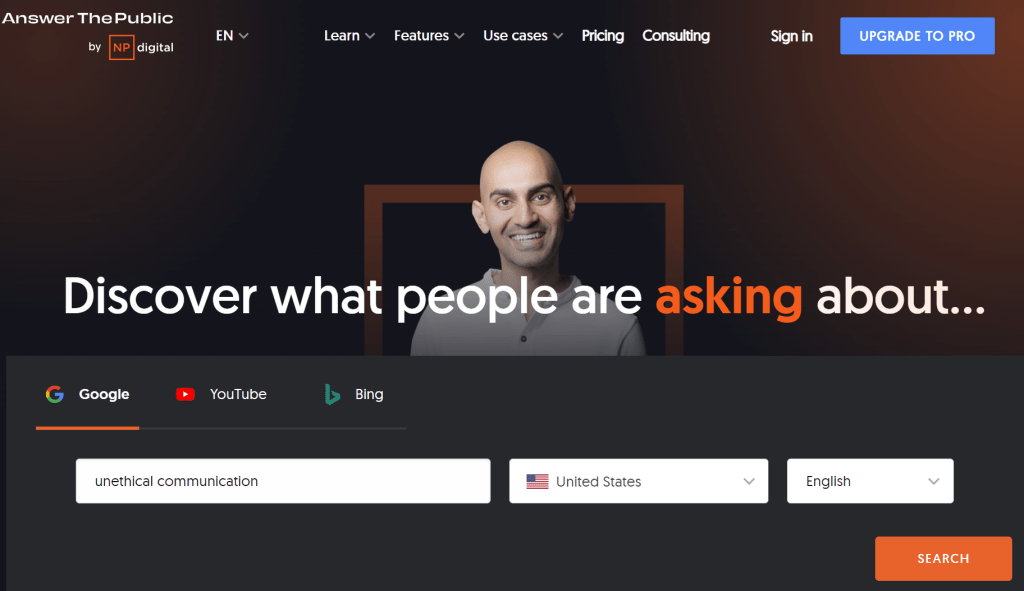
After that, I clicked the orange “search” button and it came up with a very long page of reports, including both questions people are asking about unethical communication…
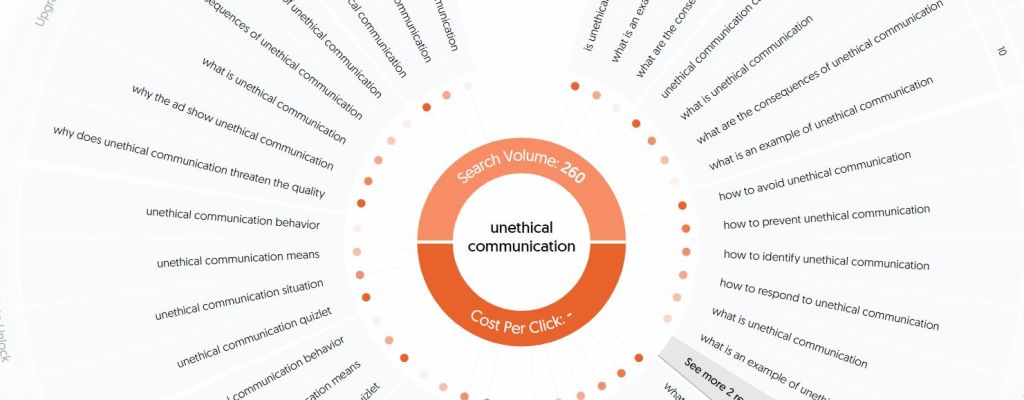
…as well as keywords that people have searched.
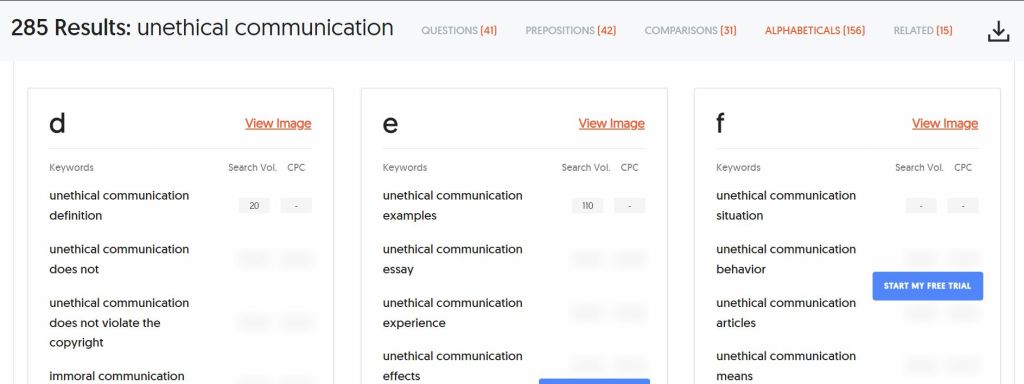
You can use the questions to guide what you will talk about, and you can use the keywords in your search engine optimization (SEO) strategy for your content. To learn more about SEO and ways to use it in science communication, check out our guide.
Why Use Social Listening in Science Communication?
The benefits of this approach include that you answer people’s questions. This can be powerful for science literacy, and it also just helps people to answer the questions they already have. Satisfying their curiosity can be helpful for your objectives, for example, if you are a science copywriter working on marketing a product. Giving people the information they want about a topic also makes them more likely to trust you and rely on your advice.
Social Listening in the “Real World”
Remember, too, that social listening doesn’t have to happen in an online context. You could just as easily have a chat with someone new to your topic, make a mental note of their questions, and write a blog about that. The key is to ensure that you are answering the questions that people are asking. The exact way you figure out people’s questions is, of course, less important.
Have you used social listening in your science communications work? Let us know in the comments!
Fancy Comma is all about using science communication to solve difficult problems. We’ve worked on big problems ourselves, and we’d like to help scientists have the skills they need to succeed in making the world a better place. Check out our free resources for scientists. We’re also on X/Twitter, YouTube, LinkedIn, Instagram, and Facebook, where we share our insights. Don’t forget to subscribe to our free newsletter and weekly blogs as well, and get our insights delivered to your inbox for free on a regular basis!
 Fancy Comma, LLC
One thought on “Social Listening for Science Communication”